
Hey there, fellow creatives! Balancing your artistic passions with life’s everyday chaos? Whether you’re into photography, videography, fashion, design, modeling, music, writing, dance, or makeup artistry, juggling creativity and productivity can feel like a circus act. But don’t sweat it. We’ve got some simple tips to help you focus, manage your time, and bring those brilliant ideas to life. All without cramping your style.
1. Focus on What Really Matters with the 80/20 Rule
First up, let’s dive into the 80/20 Rule, also known as the Pareto Principle, which suggests that 20% of your efforts bring in 80% of your results. As Tim Ferriss, author of The 4-Hour Workweek, puts it: “Focus on being productive instead of busy.” So instead of spreading yourself thin, figure out which projects give you the biggest bang for your buck and pour your energy there. If you’re a writer, maybe a few of your articles generate most of your readership. Focus on creating more of that content. Musicians might notice certain songs resonate more with fans; photographers might see that specific styles attract more clients. It’s all about working smarter and channeling your talents where they make the most impact.
2. Learn to Say No and Set Boundaries
Here’s a biggie: you can’t do it all, and that’s perfectly okay. Steve Jobs famously said, “It’s only by saying no that you can concentrate on the things that are really important.” Learning to say no to projects that don’t align with your goals frees up time for what truly matters. If you’re a videographer, you don’t have to accept every gig, especially if it doesn’t excite you or value your worth. Setting boundaries is essential for maintaining your sanity and keeping your creative juices flowing, whether you’re a dancer turning down performances that don’t inspire you or a designer choosing projects that align with your style.
3. Break Big Dreams into Doable Steps

Got a massive project that’s both thrilling and a tad intimidating? We’ve all been there, and the trick is to break it down into manageable chunks. As Henry Ford wisely said, “Nothing is particularly hard if you divide it into small jobs.” So if you’re a musician working on your first album, start by writing lyrics, composing melodies, recording tracks, and planning promotions, one step at a time. A writer might outline chapters, set daily word count goals, and schedule editing sessions. Tackling each step individually makes the whole endeavor less daunting and far more achievable. Plus, checking off those smaller tasks feels pretty good and keeps you motivated to push forward.
4. Embrace ‘Good Enough’ Over Perfectionism
Perfectionism can be a creativity killer. As Salvador Dalí said, “Have no fear of perfection, you’ll never reach it.” Sometimes striving for perfection leads to procrastination or never finishing a project at all. If you’re a photographer, don’t get stuck retouching the same image for hours. Writers, don’t agonize over every word in your first draft. Your future self will thank you for moving forward and sharing your art with the world.
5. Cut Out the Noise with a ‘Not To-Do’ List
Let’s be real. Distractions are everywhere, from endless scrolling to binge-watching the latest series. Creating a ‘Not To-Do’ list helps you dodge these productivity killers by making you aware of what sucks up your time without giving anything back. Peter Drucker, the management guru, said: “There is nothing so useless as doing efficiently that which should not be done at all.” Maybe limit time on social media platforms that don’t inspire or help your career. Musicians might skip attending every gig in town to focus on their own practice. Being intentional about what you avoid frees up mental space and time for the stuff that truly matters.
6. Get in the Zone with Single-Tasking
While multitasking might seem like a superpower, it often leads to half-finished projects and burnout. Neuroscience backs this up: our brains aren’t wired to handle multiple tasks simultaneously effectively. Author Gary Keller says in The ONE Thing: “Multitasking is merely the opportunity to screw up more than one thing at a time.” Try single-tasking, giving one task your full attention. If you’re a writer, dedicate time to writing without checking emails. Musicians, focus on practicing that challenging piece without distractions. Designers, immerse yourself in your latest project without the constant ping of notifications. You’ll be amazed at how much more you accomplish and how your creativity flourishes when you give it your undivided attention.
7. Organize Your Day with the 1-3-5 Rule
Ever feel like your to-do list is out to get you? The 1-3-5 Rule might just become your new best friend. Aim to tackle one big thing, three medium things, and five small things each day. Productivity expert David Allen, author of Getting Things Done, emphasizes: “You can do anything, but not everything.” For example, if you’re a musician, your day might include recording a new track (big), practicing scales, networking with industry contacts, updating your website (medium), and answering emails, organizing your workspace, posting on social media, listening to new music, scheduling rehearsals (small). This method helps you prioritize without feeling overwhelmed and keeps you moving forward on multiple fronts.
8. Batch Similar Tasks Together
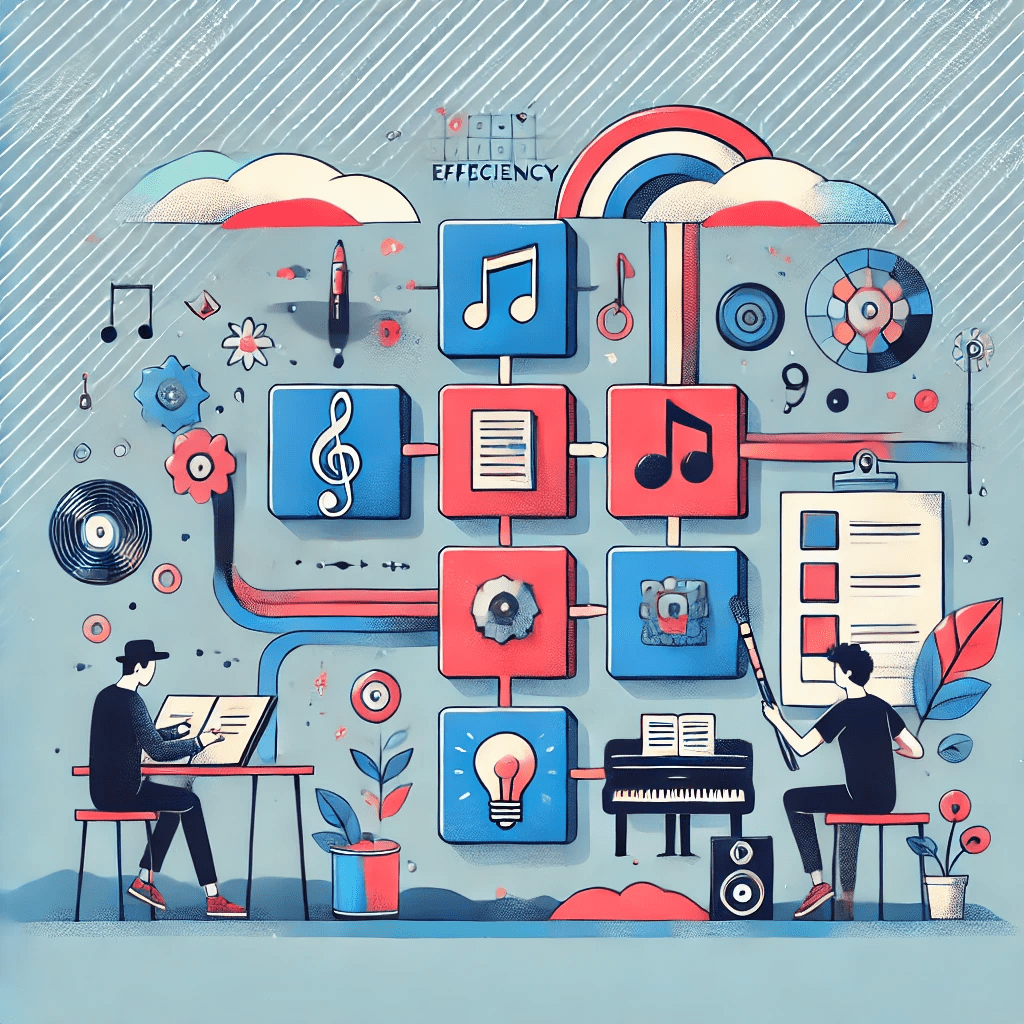
Efficiency can be your best friend. By grouping similar tasks, you reduce the mental load of constantly switching gears. Productivity expert Cal Newport suggests in Deep Work that batching helps you enter a state of flow more easily. Writers might set aside time to outline multiple articles at once, then move on to drafting. Photographers could edit all photos from a shoot in one go rather than sporadically. Musicians might dedicate a block of time to songwriting, then shift to practicing. Batching tasks saves time and keeps you focused.
9. Tackle Tough Tasks When You’re Fresh
We all have that one task we’ve been putting off, maybe it’s choreographing a complex dance routine or editing a long video, but try tackling it first thing when your energy levels are high. This strategy is often referred to as “eating the frog,” popularized by Brian Tracy in Eat That Frog!. He says, “If you have to eat two frogs, eat the ugliest one first.” Getting the hardest thing out of the way early can make the rest of your day feel like a breeze. Not a morning person? No worries! Do your most challenging work whenever you feel most alert, whether that’s midday or during the quiet hours of the night. Align tough tasks with your peak energy times.
10. Stay Focused with Pomodoro Sessions
If staying focused feels like herding cats, the Pomodoro Technique might be your secret weapon. Developed by Francesco Cirillo, it involves working intensely for 25 minutes, then taking a 5-minute break, and repeating. Creatives can really benefit from this. Writers can power through drafting, musicians can practice pieces, videographers can edit footage in focused bursts. And if 25 minutes doesn’t suit you, tweak the intervals. Maybe 45 minutes on and 15 minutes off works better for your flow. Don’t underestimate those breaks as they’re crucial for recharging and keeping your creativity sharp.
11. Capture Ideas Before They Slip Away with the 2-Minute Rule
Ever had a brilliant idea pop into your head at the most random time, only to forget it later? The 2-Minute Rule, inspired by productivity expert David Allen, is about capturing those fleeting thoughts before they vanish. Allen advises, “If an action will take less than two minutes, it should be done at the moment it’s defined.” Keep a notebook handy or use a notes app on your phone to jot down ideas as they come. If you’re a dancer and think of a new move, record it quickly. Writers might jot down a plot twist. Making this a habit ensures those sparks of inspiration are saved for later brilliance.
12. Kick Indecision to the Curb with the 5-Second Rule
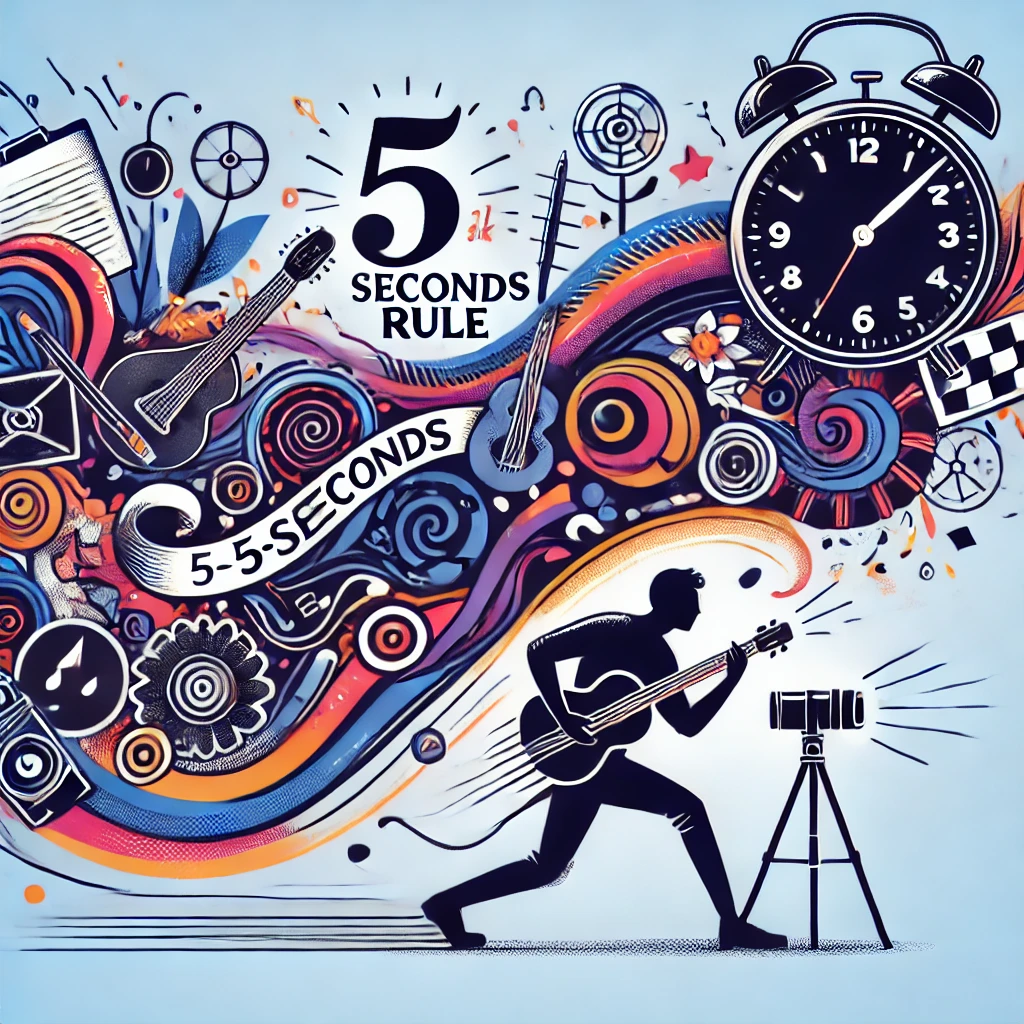
Sometimes overthinking can freeze us in our tracks. The 5-Second Rule, popularized by Mel Robbins in The 5 Second Rule, suggests that when you feel the urge to act on a goal, you must move within five seconds or your brain will kill the idea. When you catch yourself hesitating, maybe about reaching out to a potential collaborator or trying a bold new style, count down from five and then just go for it. Remember, as Robbins says, “You are one decision away from a completely different life.” Embracing action over hesitation can open doors you didn’t even know were there.
Wrapping It Up
Being productive doesn’t mean putting a leash on your creativity. As the legendary artist Pablo Picasso once said, “Action is the foundational key to all success.” These strategies are all about freeing up your time and mental space so you can do more of what you love. Remember, there’s no one-size-fits-all here, so tweak these tips to suit your unique style and workflow. It’s about finding that sweet balance between structure and spontaneity that lets your creativity shine brightest. So go ahead, give these hacks a shot, and watch your productivity and creativity soar. You’ve got this!
 Kisau Photography