Just when you think you’ve mastered it, photography throws a new challenge your way! Every frame brings its own twists and turns. Some test your technical skills while others push your creativity.
Whether you’re navigating unpredictable lighting, capturing movement, or composing around a dynamic subject, each moment keeps you on your toes and calls for quick thinking and problem-solving.
Below are three examples from my own work that highlight the unique struggles photographers face. I also share the techniques used to overcome them.
The Challenge of Light: Working with Neon Glow
The Story Behind the Shot
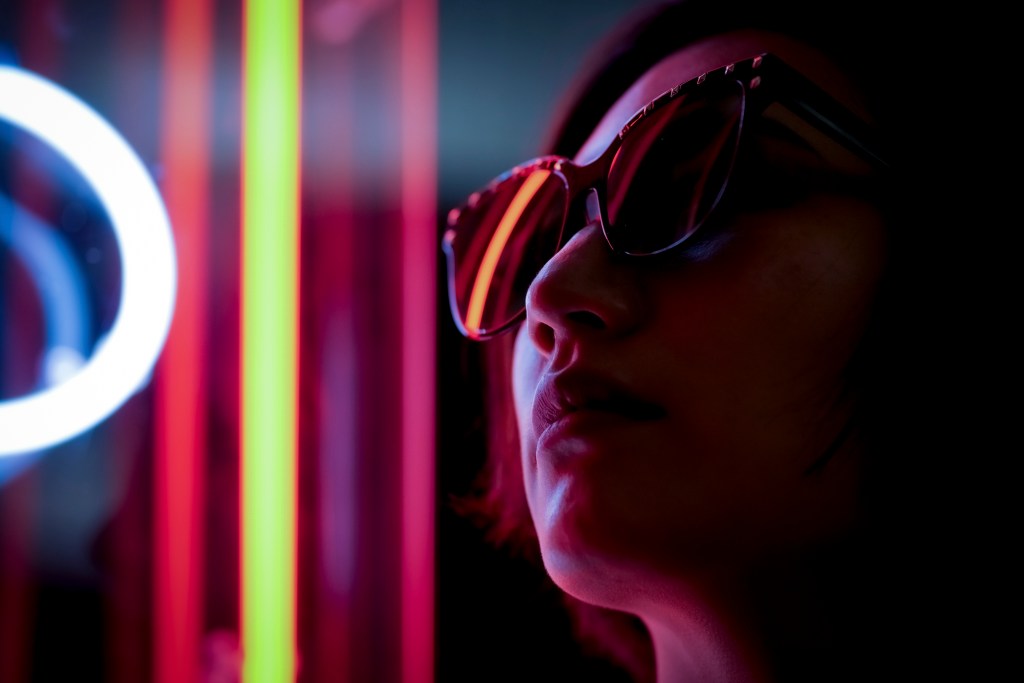
This photograph of Yasmine was taken after dark inside the Nicholas Building in Melbourne, Australia. She stood in front of the Vintage Sole storefront. The only available light came from the neon signs. These cast deep hues of purple, yellow, and red across the scene. No external lighting or flash was used. The goal was to capture the bold and cinematic atmosphere created by the neon glow while preserving the delicate details of Yasmine’s face.
Challenges and Solutions
- Uneven Lighting and Color Casts. Neon lights can create stunning visuals, but their color intensity can overwhelm an image. The purple and red tones were particularly dominant. I needed to balance them without losing their vibrancy. I carefully positioned Yasmine to keep the most flattering colors on her face while avoiding harsh shadows.
- Reflections and Shadows. Yasmine’s sunglasses reflected the neon lights, which could have distracted from the overall composition. Finding the right angle was critical to minimizing unwanted glare while keeping the reflections that added to the mood.
- Low Light and Image Quality. Shooting at a low ISO helped maintain image clarity and reduce noise. It also meant a slower shutter speed. Keeping the camera stable was essential. I used a combination of careful handholding and bracing against a surface for added steadiness.
Takeaway
Working with neon light requires patience and adaptability. Positioning your subject strategically and adjusting white balance in post-processing can help maintain color harmony. The key is to embrace the lighting for its mood-enhancing qualities rather than fight against it.
The Challenge of Motion: Capturing Speed and Energy
The Story Behind the Shot
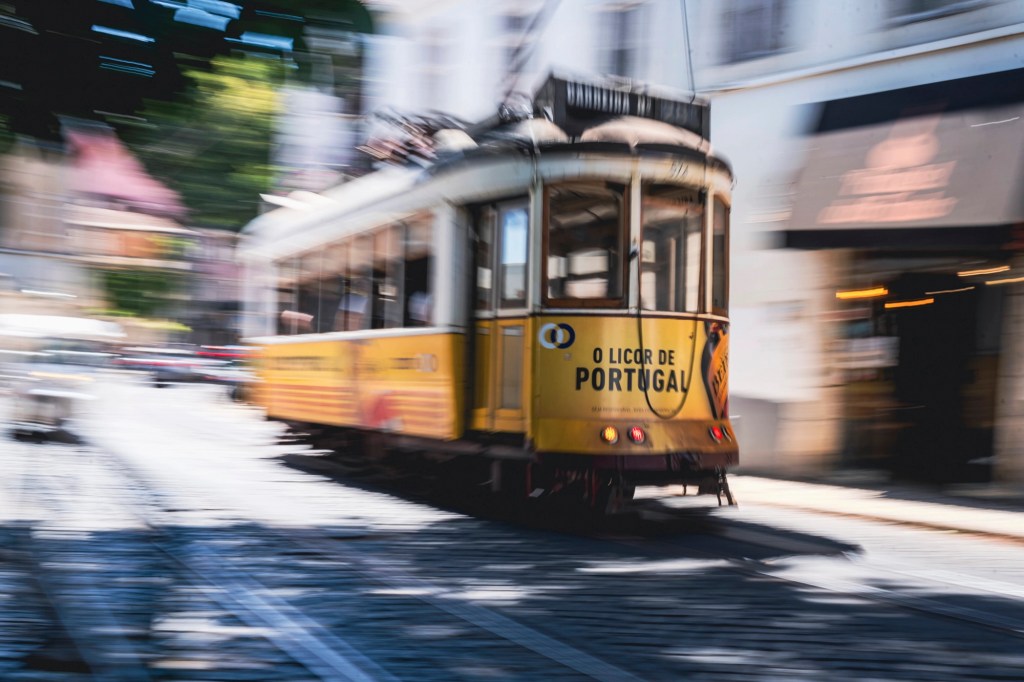
Lisbon’s iconic yellow trams are a defining feature of the city’s charm. My goal was to capture a moment that conveyed the energy of the tram as it moved through the narrow cobblestone streets. I wanted to show motion while keeping enough detail for the image to remain dynamic and engaging.
Challenges and Solutions
- Panning for the Perfect Motion Blur. Freezing a moving subject is one thing. Conveying motion through blur requires precision. I used a slow shutter speed and tracked the tram with a steady panning motion. This ensured that the subject remained sharp while the background blurred into streaks of color.
- Bright Daylight and Exposure Control. Shooting in midday sunlight required careful exposure management. A low ISO ensured minimal noise. A narrow aperture helped balance the bright conditions. A neutral density (ND) filter would have been helpful. Since I did not have one, I adjusted shutter speed to avoid overexposure.
- Timing and Stability. The tram moved quickly, leaving only seconds to react. I had to anticipate its motion and start panning before it reached the ideal spot in my frame. The uneven cobblestone streets made it tricky to maintain balance. Planting my feet firmly helped keep the camera steady.
Takeaway
Motion photography is all about timing and technique. Panning requires practice. When executed well, it brings images to life by freezing just enough detail while letting the background blur into motion.
The Challenge of Subjects: Photographing People and Animals Together
The Story Behind the Shot
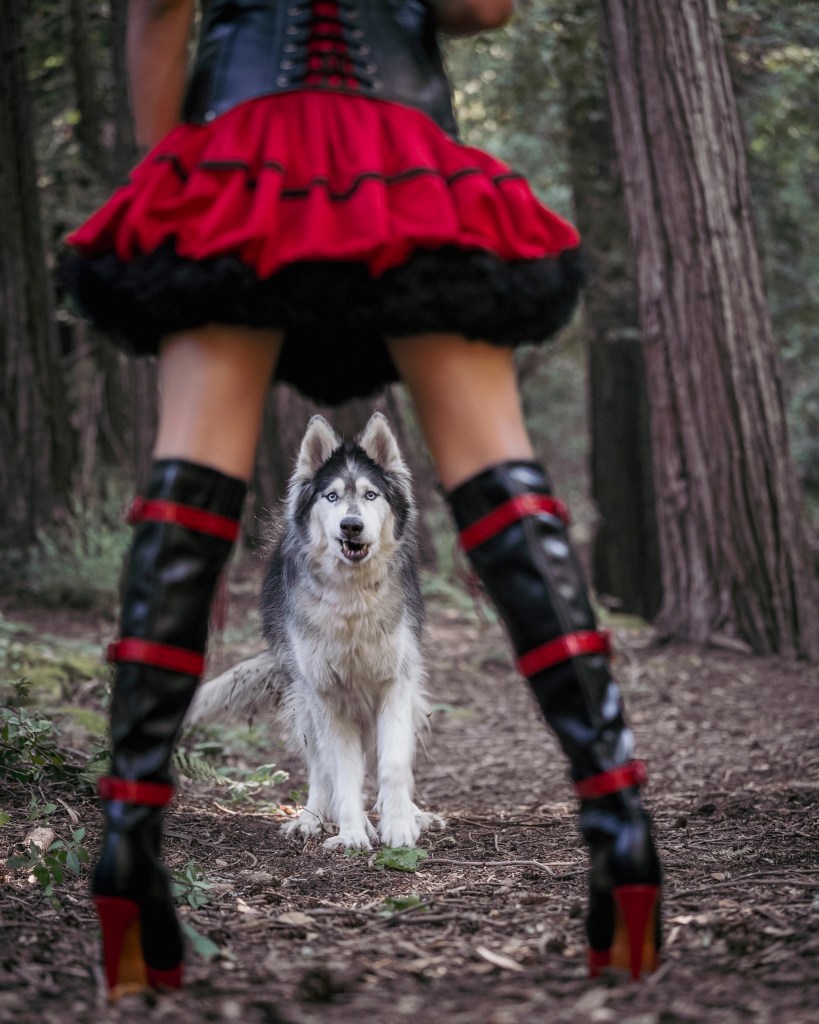
“Little Red and the Guardian of the Forest” was a conceptual shoot inspired by Little Red Riding Hood. Mary Jayne played the role of Little Red. Nymeria, the dog, represented a reimagined version of the wolf. She was a protector rather than a predator. Shot in a towering redwood forest, the goal was to create an ethereal and fairy-tale atmosphere using only natural light.
Challenges and Solutions
- Working with an Animal Subject. Unlike human models, dogs will not hold a pose or follow a photographer’s directions. Nymeria was naturally curious and distracted by the sounds and scents of the forest. To keep her engaged, I used treats, sounds, and gestures to direct her gaze. This helped me capture moments of connection between her and Mary Jayne.
- Managing Natural Light. The dappled sunlight filtering through the trees created a beautiful atmosphere. It also posed exposure challenges. Some areas were too bright and others were too dark. By adjusting the angle and waiting for the right moments when the light softened, I was able to balance the highlights and shadows naturally.
- Creating a Narrative Composition. The story of Little Red Riding Hood relies on a strong visual connection between the girl and the wolf. Capturing a moment where they were both engaged with each other while maintaining the forest’s mystical feel required patience and quick reflexes. The composition had to ensure they remained the focal points without being lost in the scenery.
Takeaway
Photographing dogs requires flexibility and patience. Anticipating their movements, using engagement techniques, and working with natural light can lead to stunning results. The key is to embrace spontaneity and capture the organic moments that unfold.
Expect the Unexpected
Photography is as much about problem-solving as it is about artistic vision. Each environment presents unique obstacles. Learning to adapt allows you to capture compelling images no matter the conditions.
- Light can be a challenge. It is also one of photography’s most powerful storytelling tools.
- Motion adds energy to an image. It requires technique and precision to execute well.
- Subjects, whether human or animal, bring personality to a frame. They also require patience and adaptability.
By understanding these challenges and learning how to navigate them, you gain the confidence to create striking images in any situation. The unpredictable light, fleeting motion, and uncooperative subjects are what make photography so exhilarating.
© Paul Tocatlian. All Rights Reserved.
 Kisau Photography