
Can a dress dream in pixels?
In the heart of Silicon Valley, where technology giants and bold startups collide in a playground of ideas, Natalie Sheu and I came together to fuse fashion and technology into one dazzling conversation. A bold dance where creativity hums through every neural spark of imagination.
This shoot, set against The Orb on Google’s campus in Mountain View, was born from a simple question: what happens when fashion meets technology not as opposites, but as collaborators?
The Dialogue Between Fashion and Technology
Fashion and technology share more than we often realize. Both are languages of design. Both shape how we move through the world. One through fabric, the other through form and function. Both rely on rhythm, structure, and transformation. In fashion, a seam defines silhouette. In technology, a circuit defines possibility.
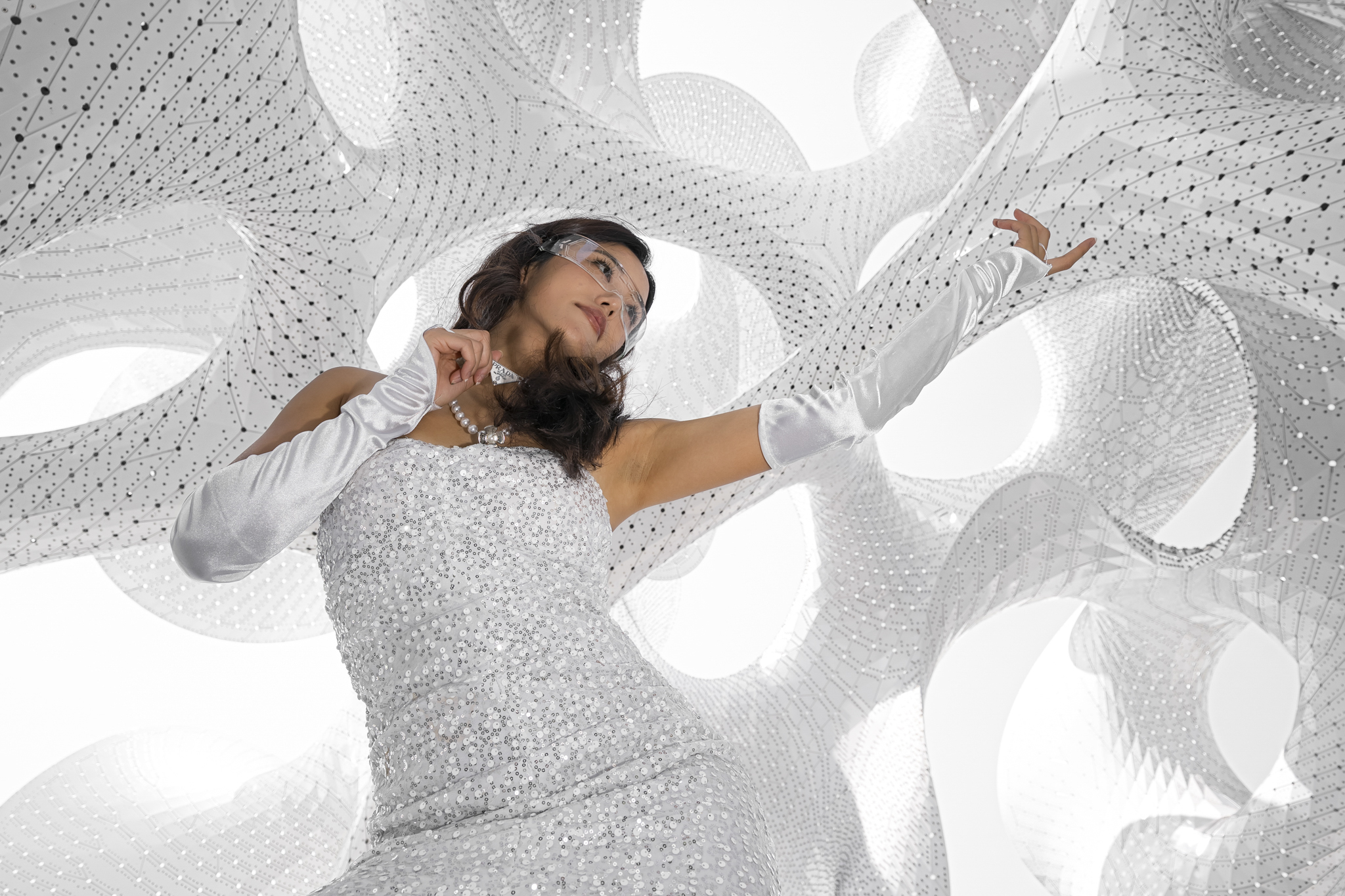
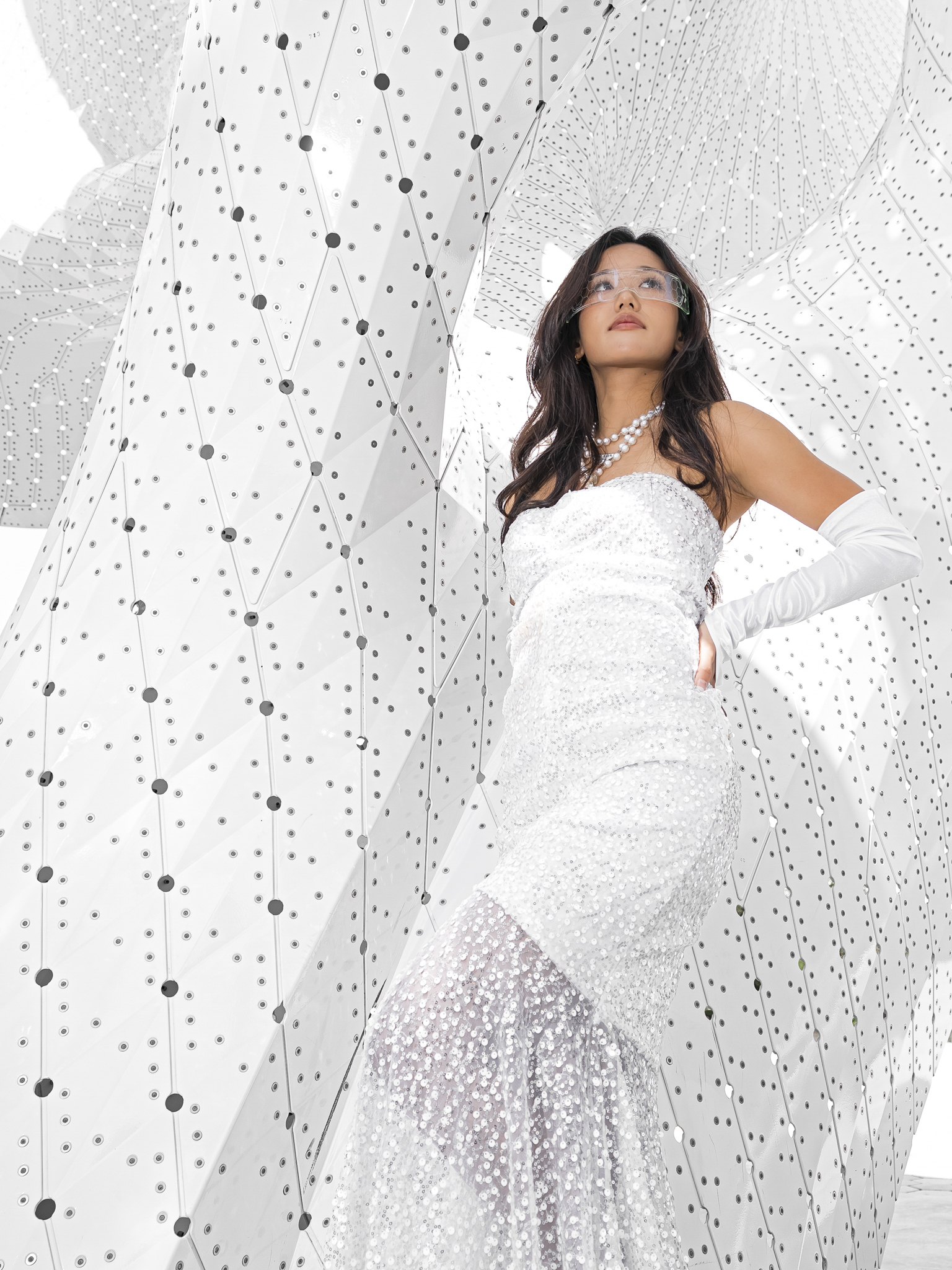
In this series, technology doesn’t simply surround Natalie. It breathes through her, shaping the space she inhabits. The sculptural environment reflects the precision of digital design. It feels algorithmic, like standing inside the mind of a neural network. Yet when Natalie steps into the frame, something profound shifts. The geometry softens. The machine learns to feel.
Natalie, a mechanical engineer by profession, embodies this intersection perfectly. Her background brings meaning to every frame. She understands the logic behind the patterns and the rhythm behind the symmetry. When she poses, it’s as if she is in dialogue with the architecture. Not fighting against it but harmonizing with its form.

Design, Light, and Texture: A Study in Digital Elegance
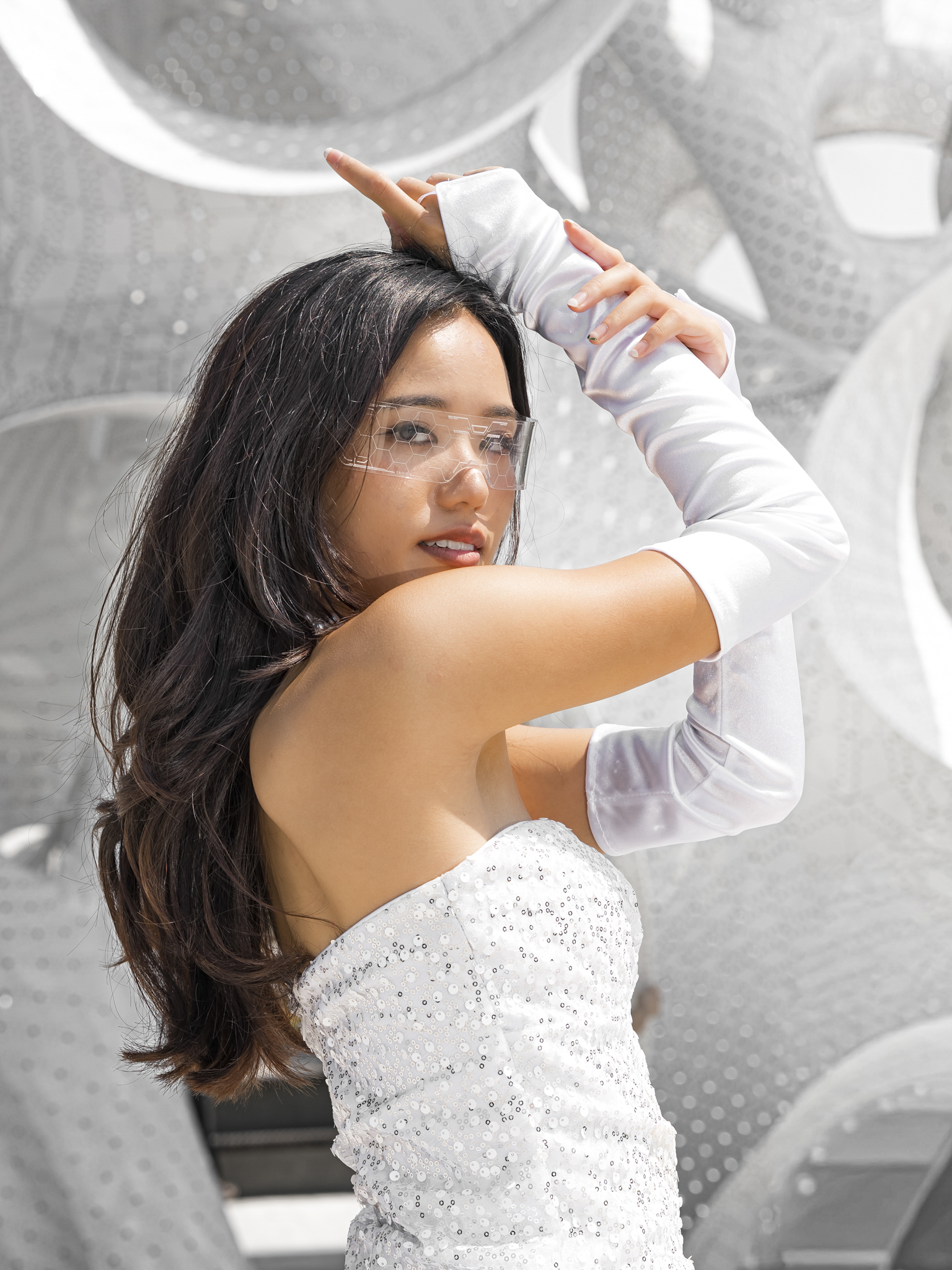
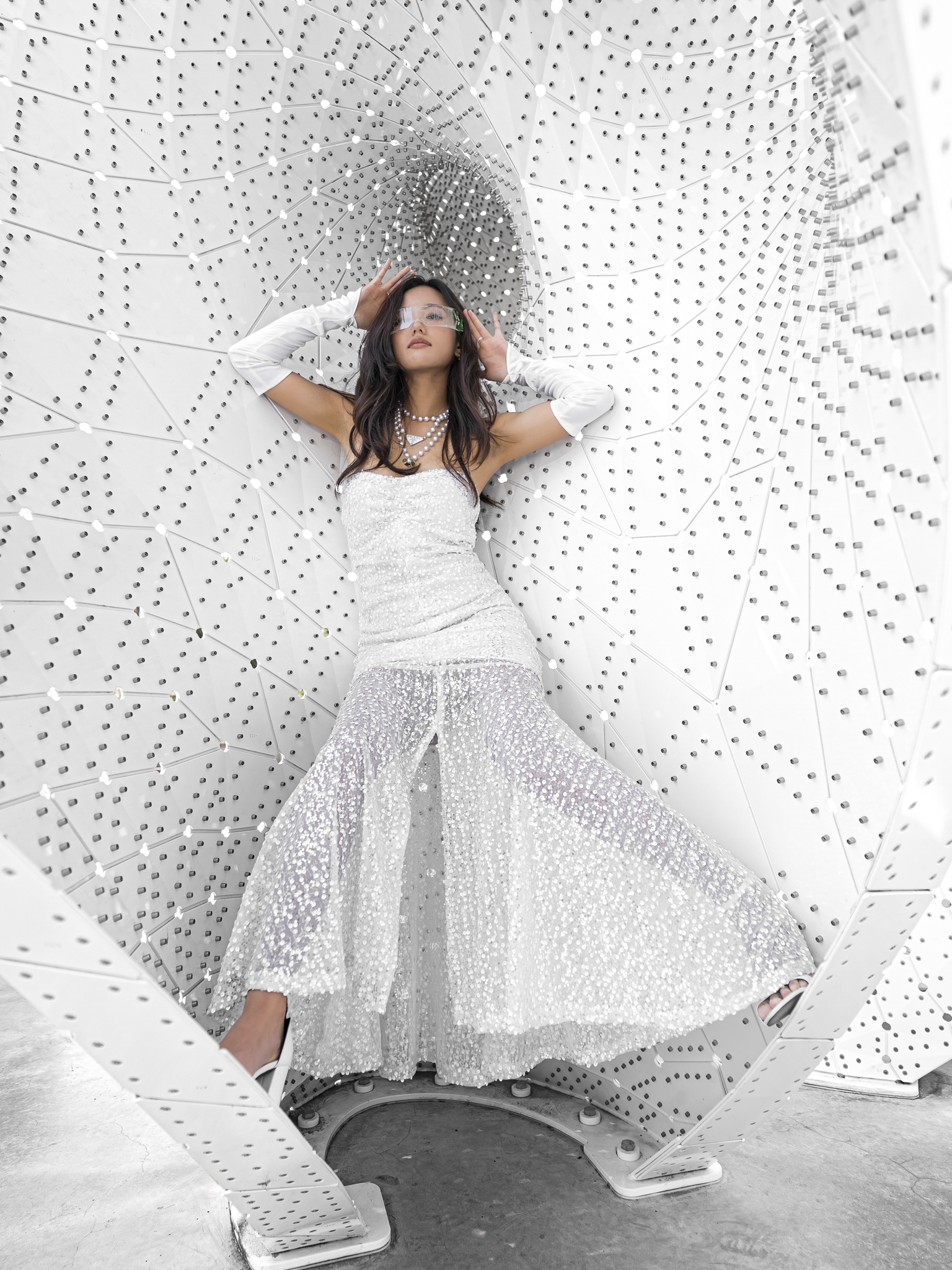
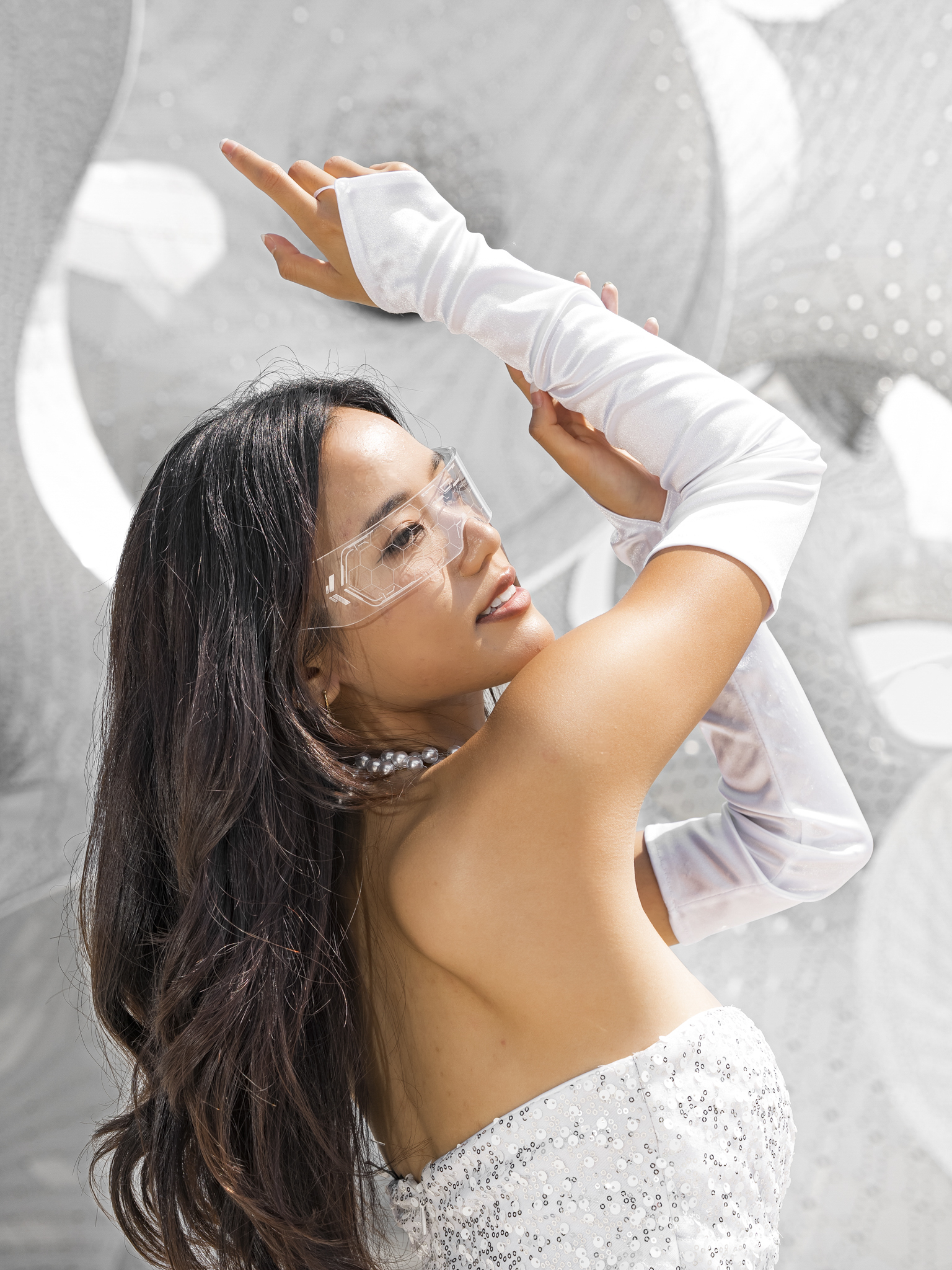
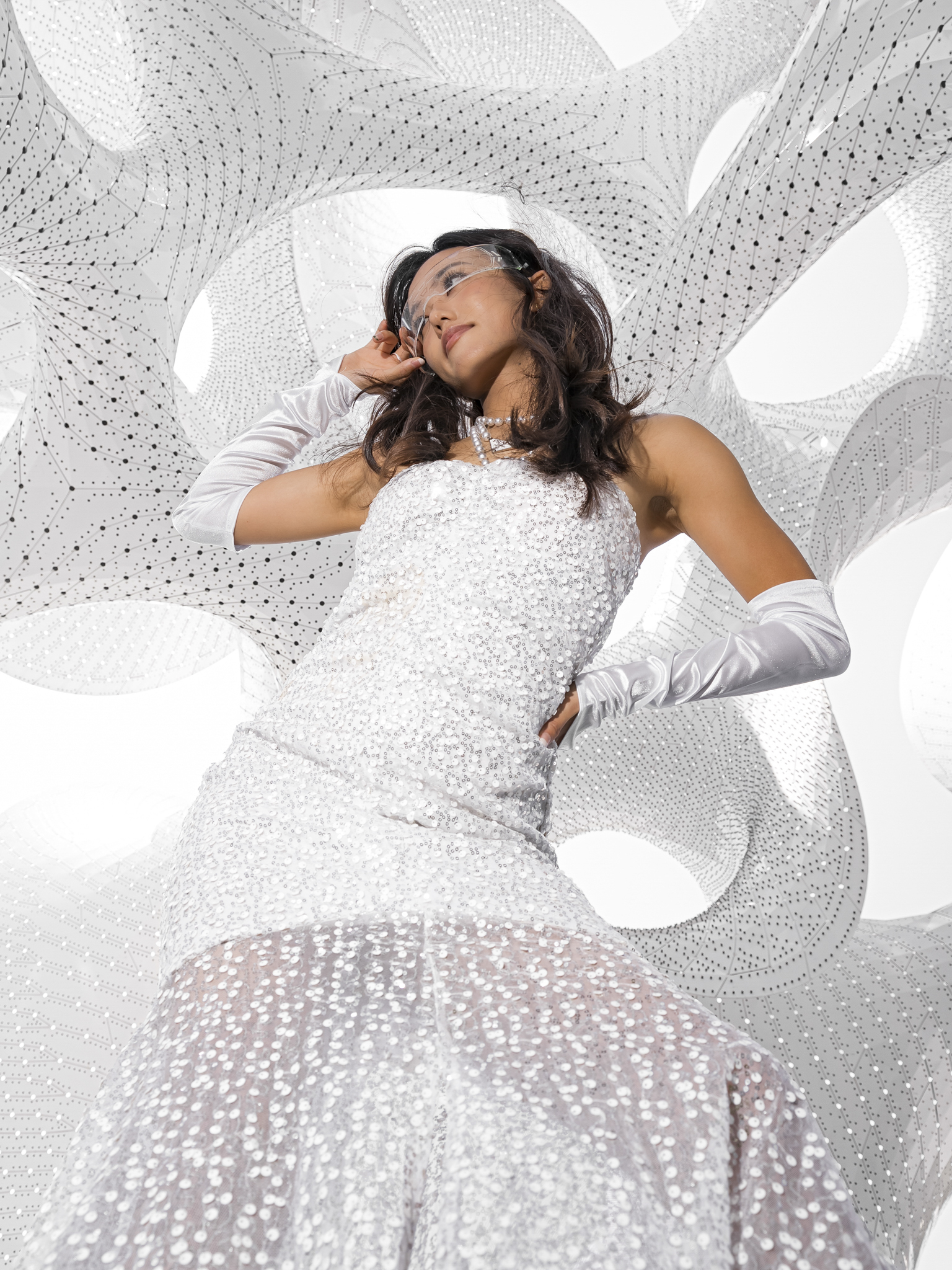
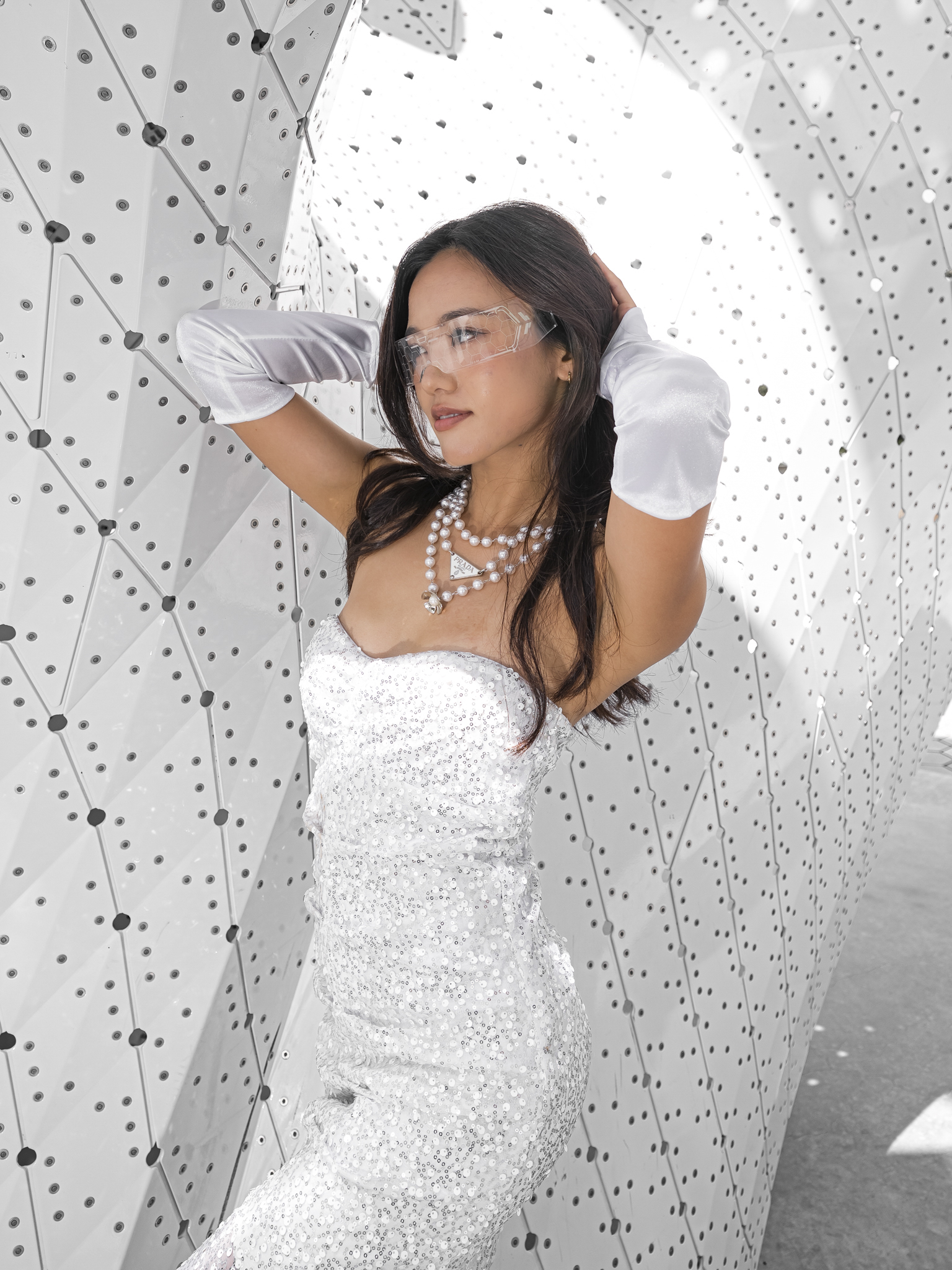
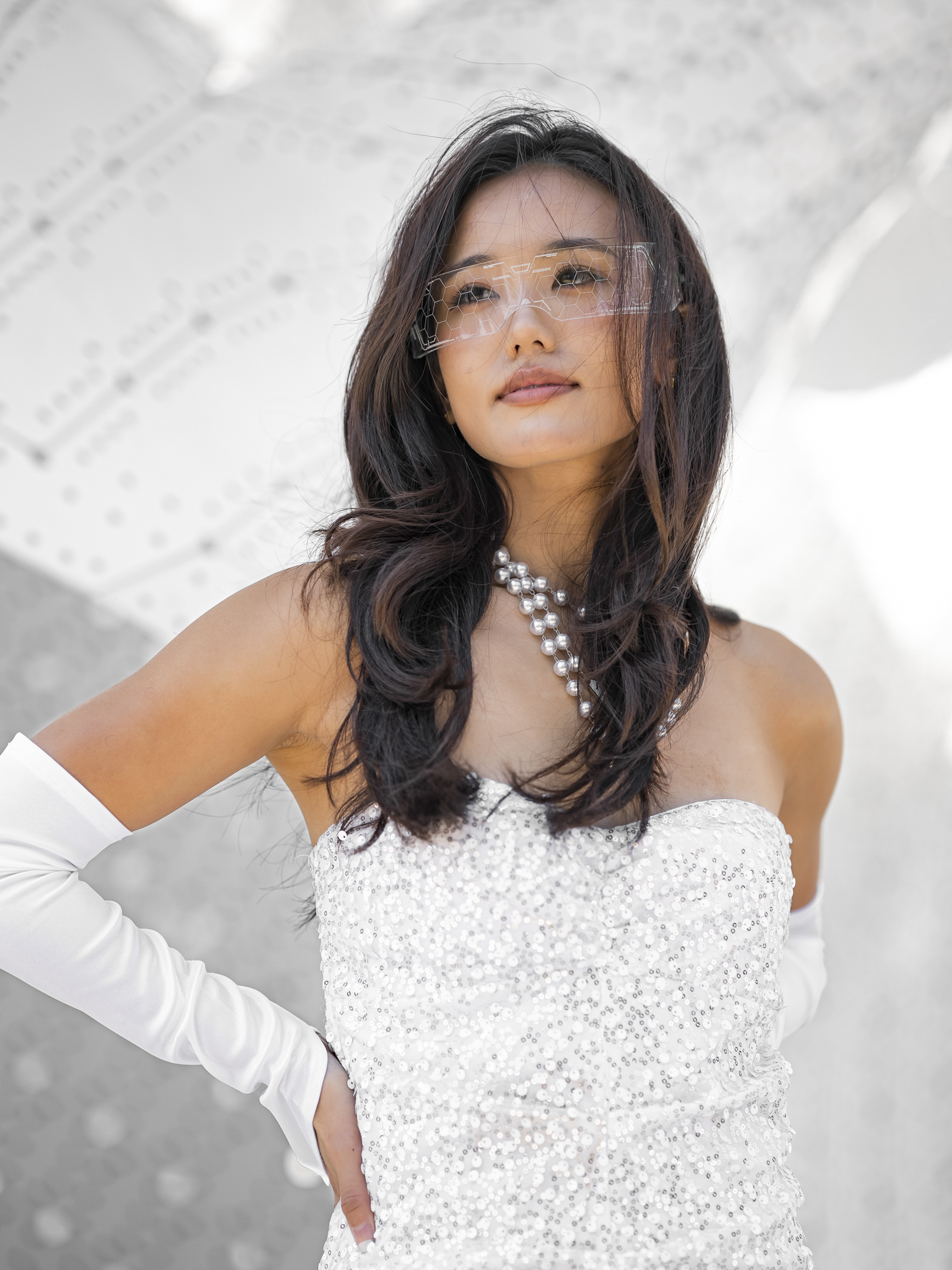
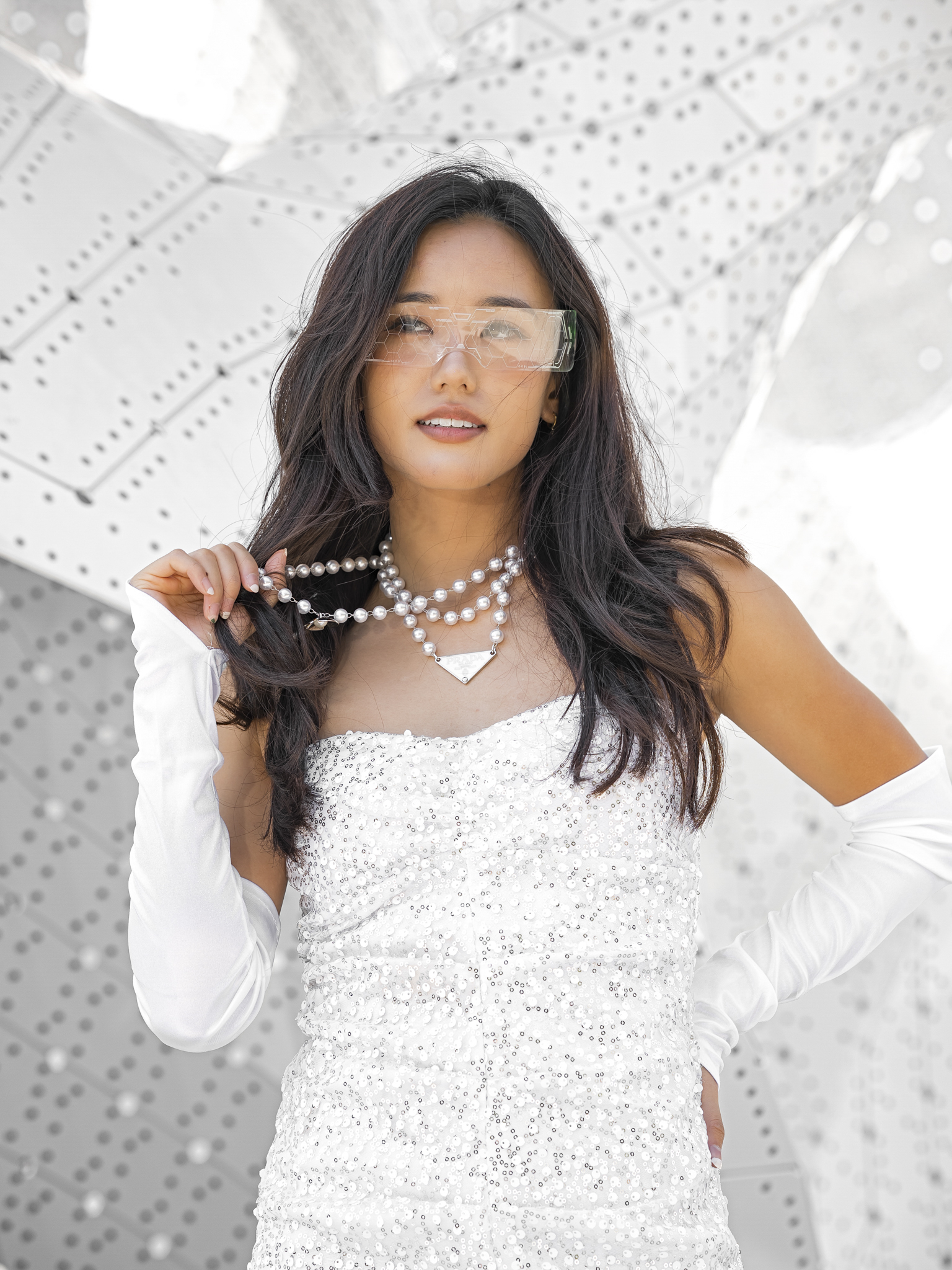
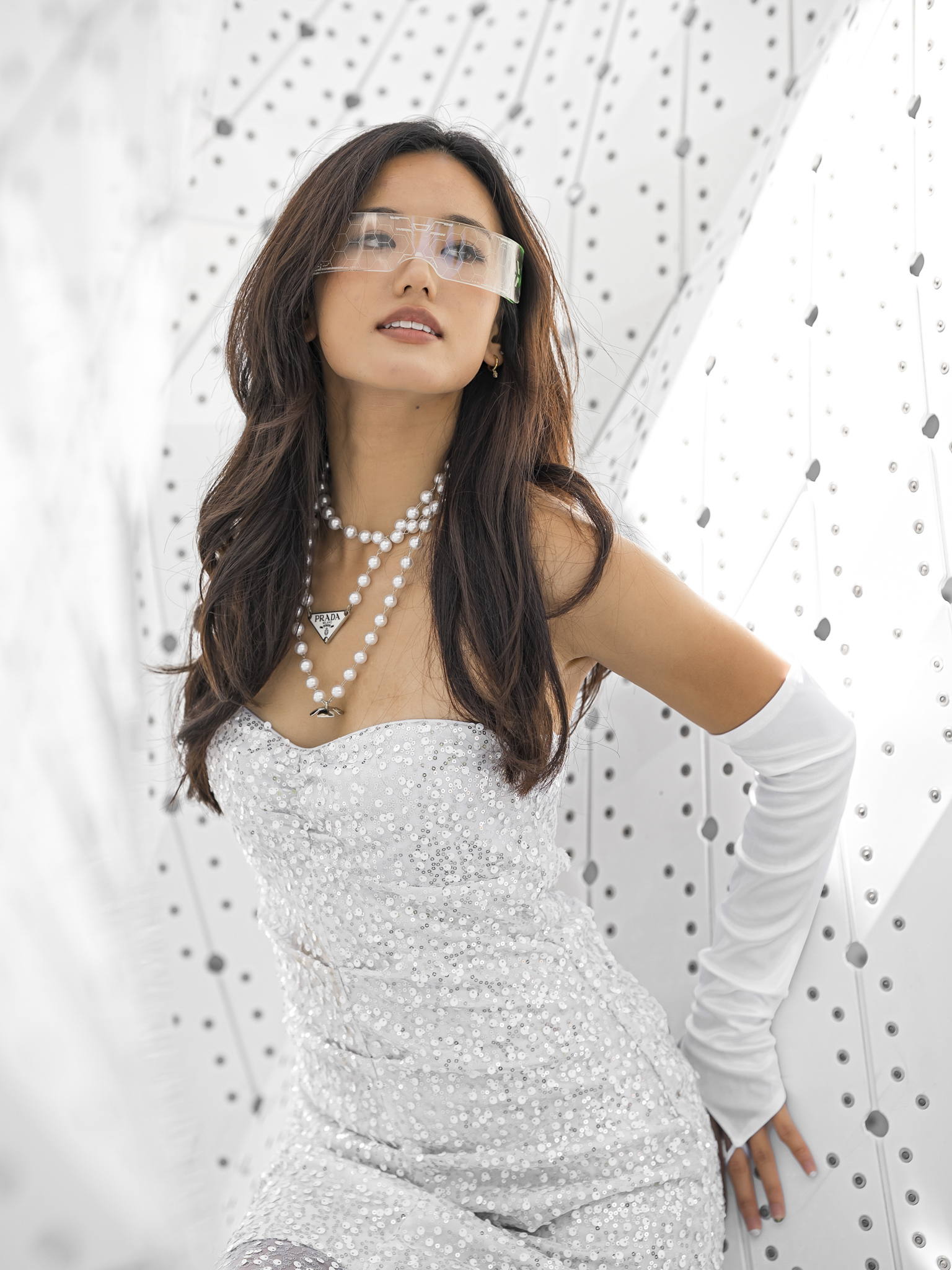
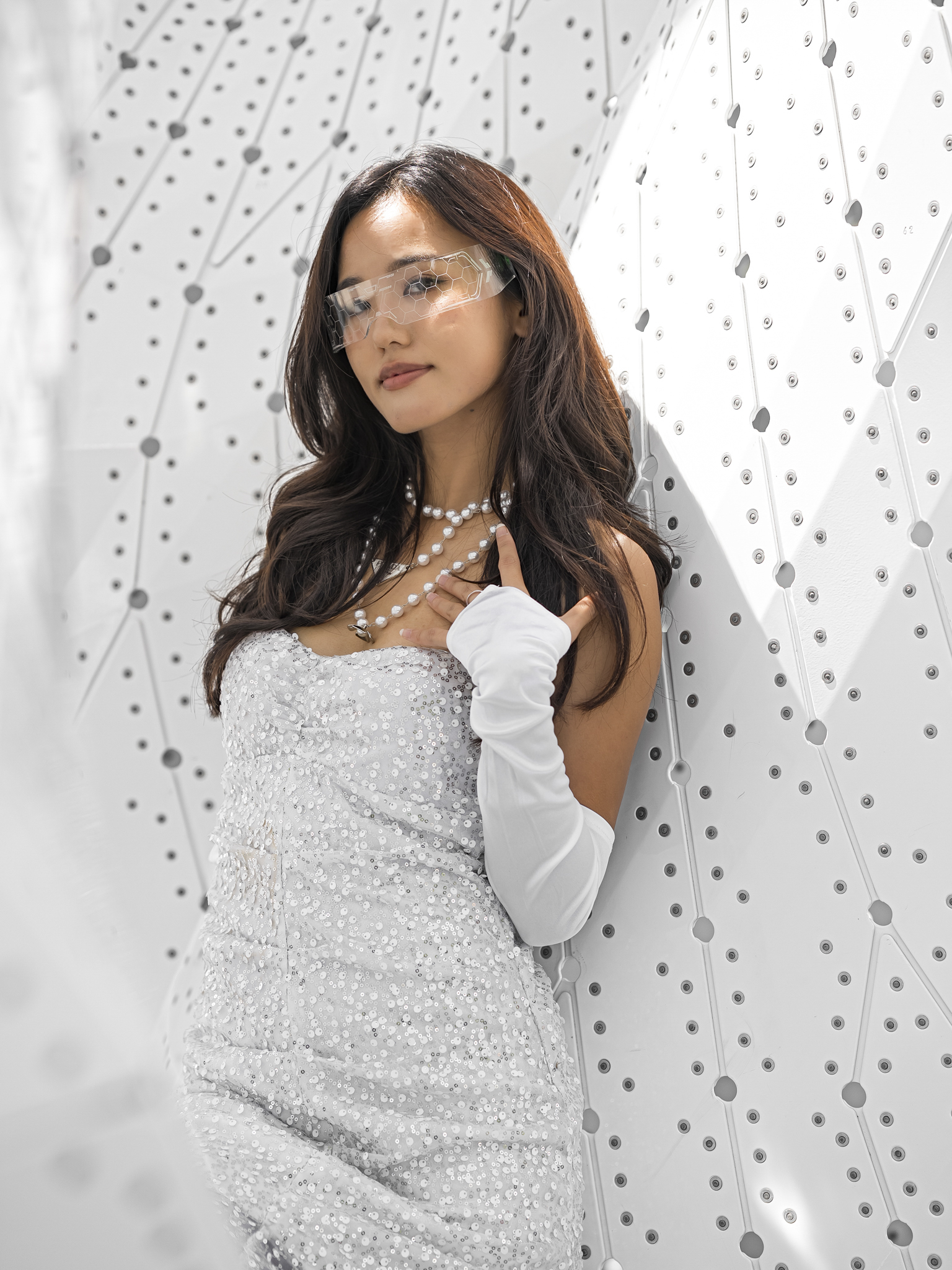
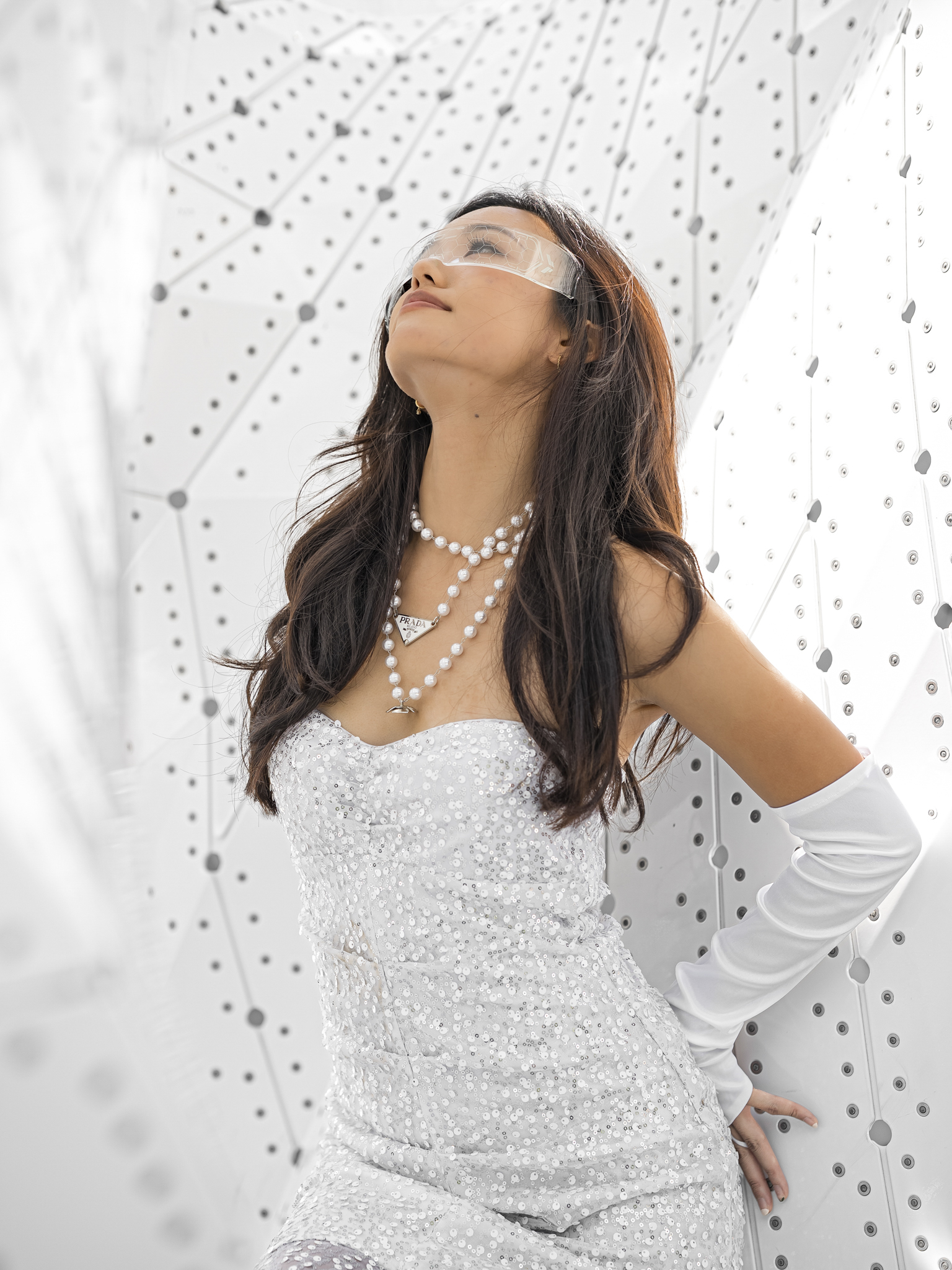
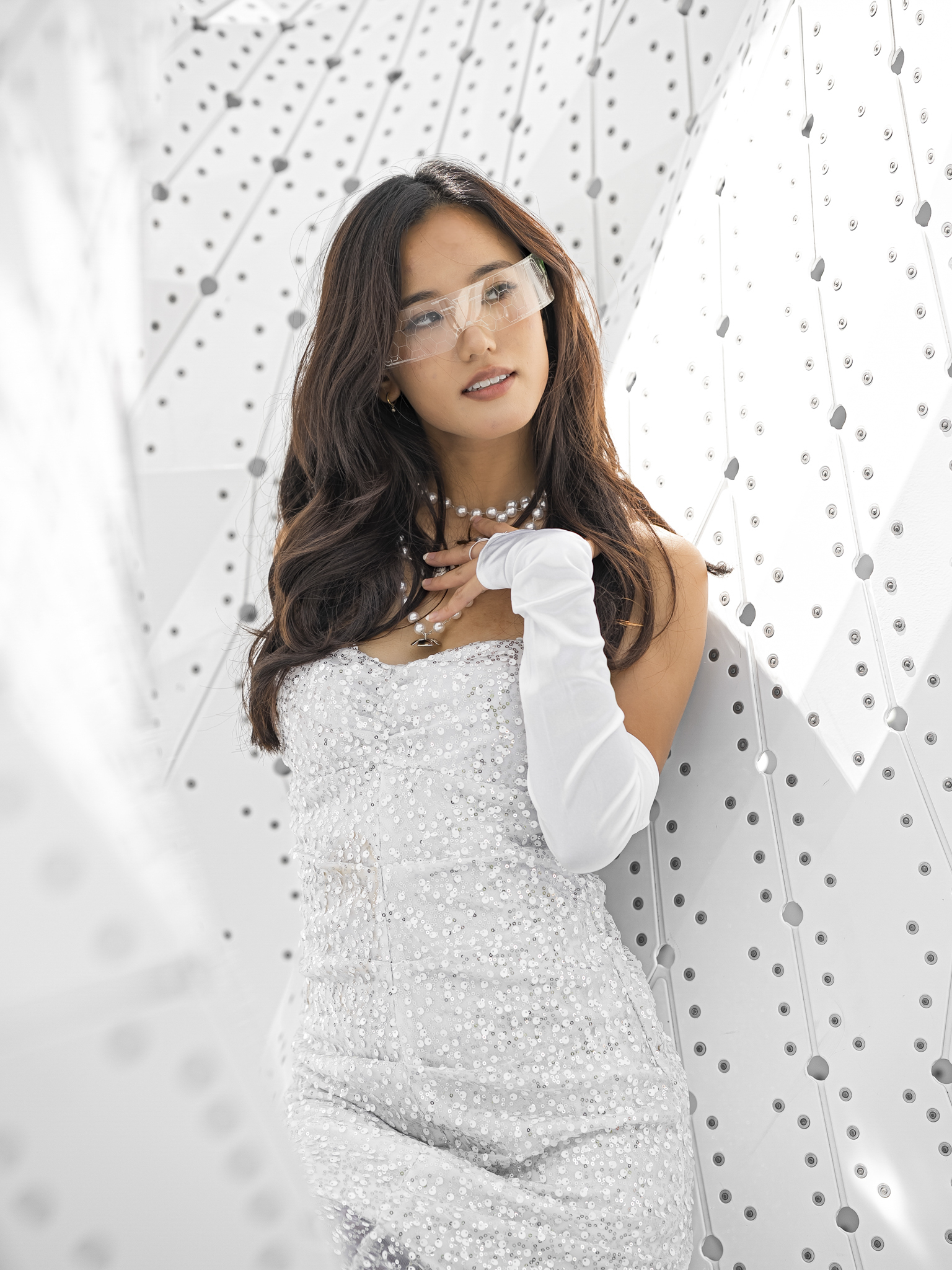
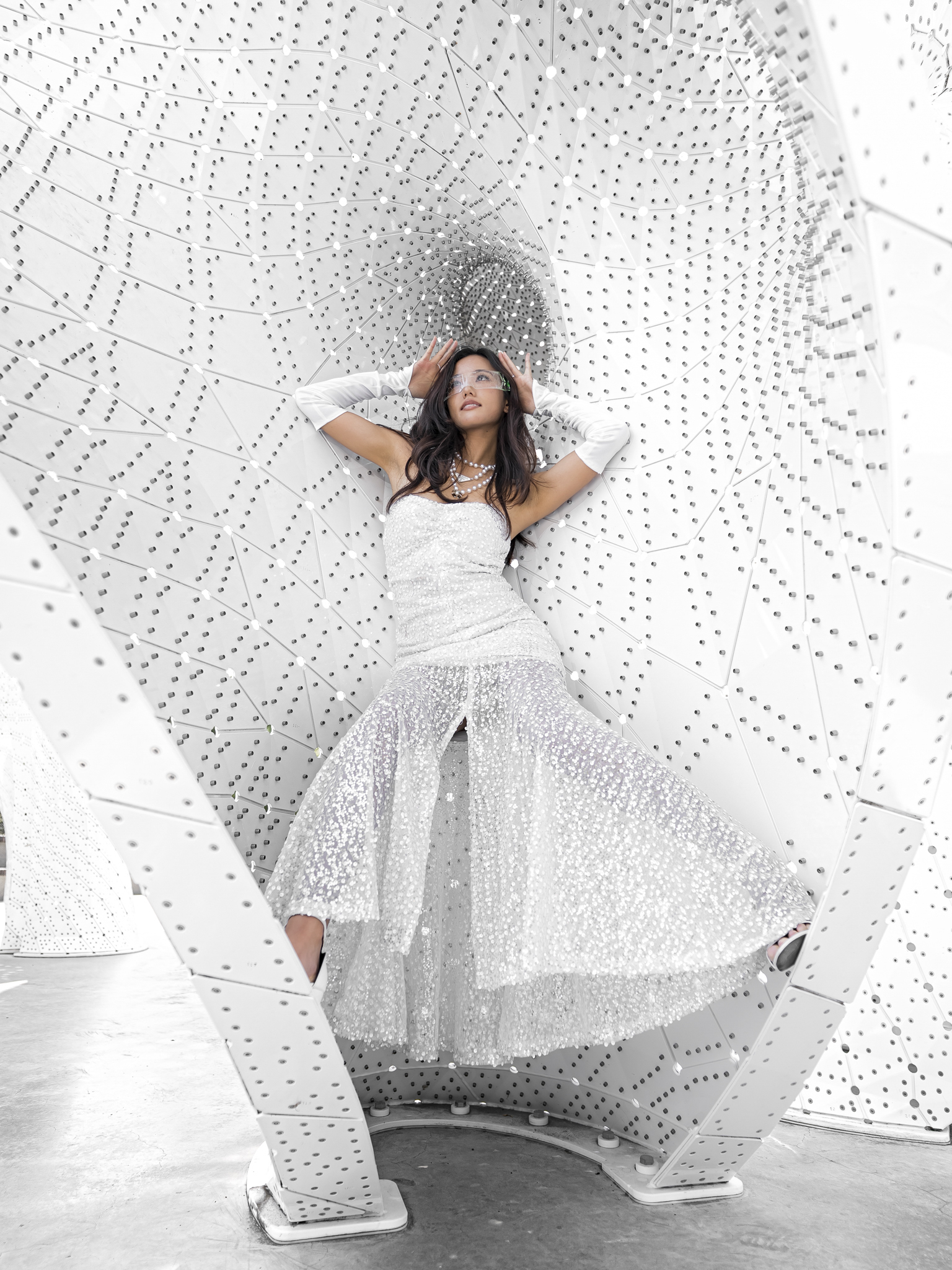
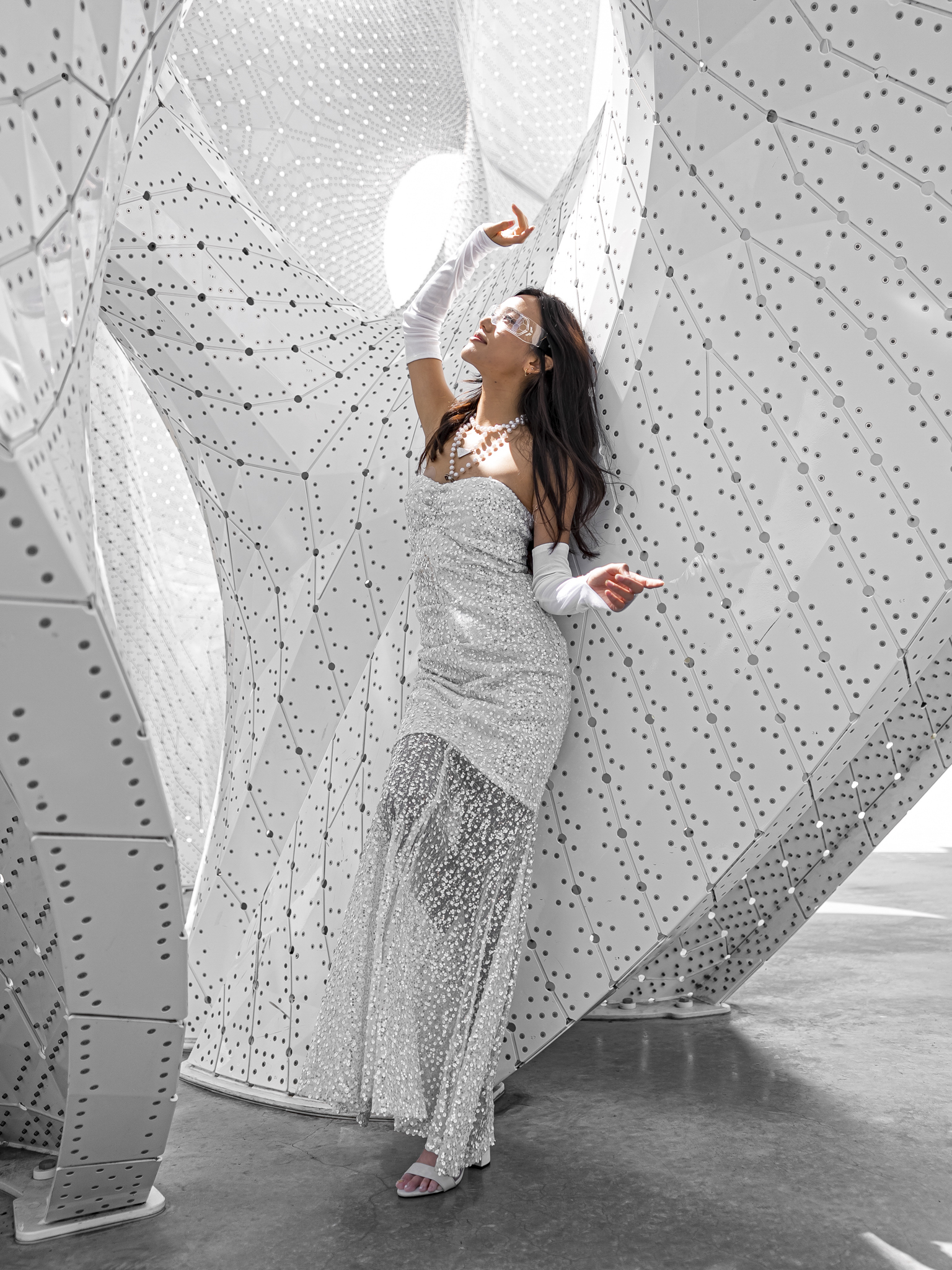
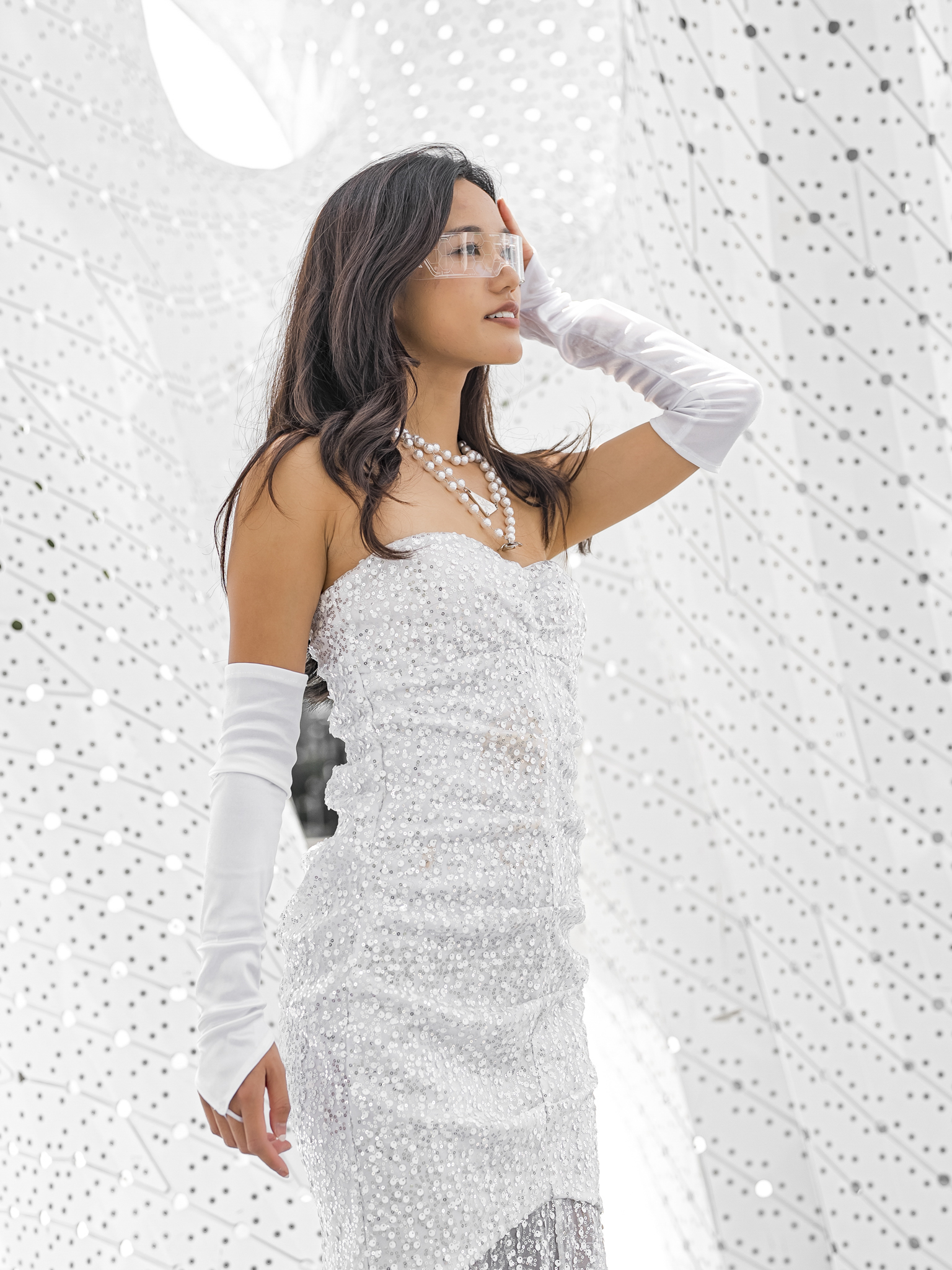
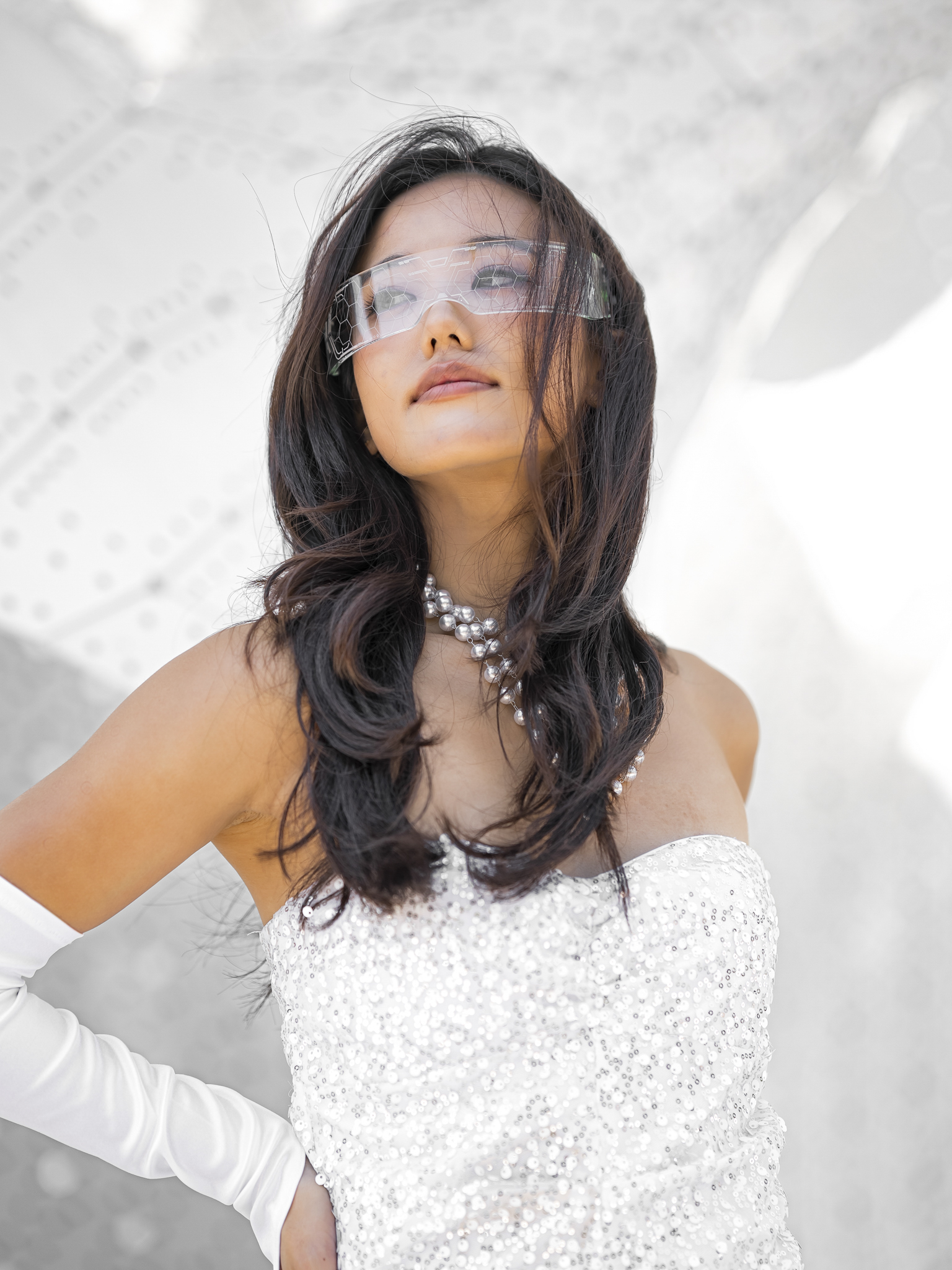
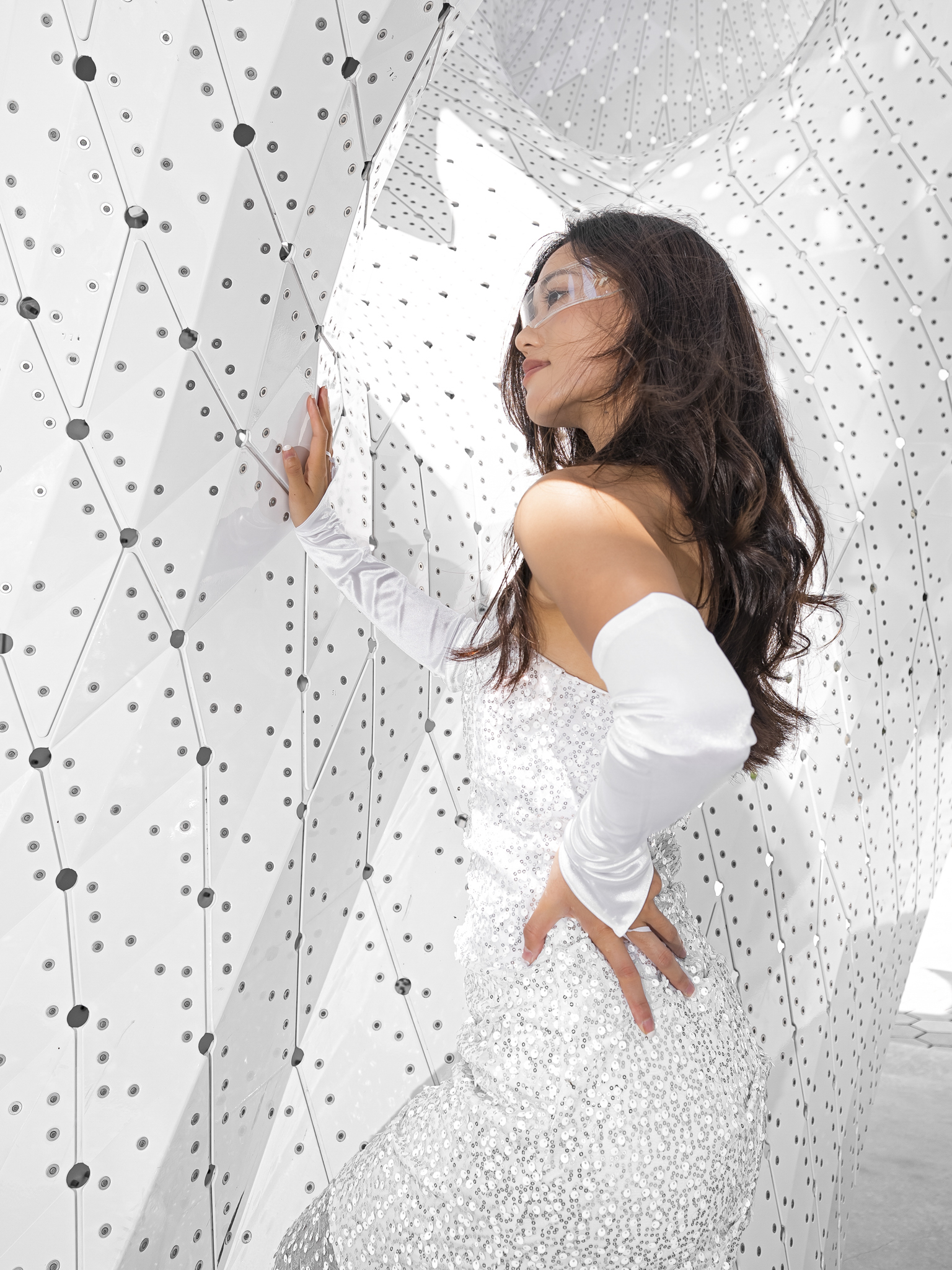
Natalie wears a sequined dress from the Kisau Clothing Collection, designed to shimmer like circuitry in motion. Under sunlight, the sequins scatter light across the white metal walls, creating a constellation of reflected points. They glint like data streams, each sparkle a pixel in a living composition. Her long satin gloves add continuity, extending the line of her body into the surrounding patterns, almost as if she’s reaching through the surface of the structure itself. A metaphor for our own reach into the digital realm.
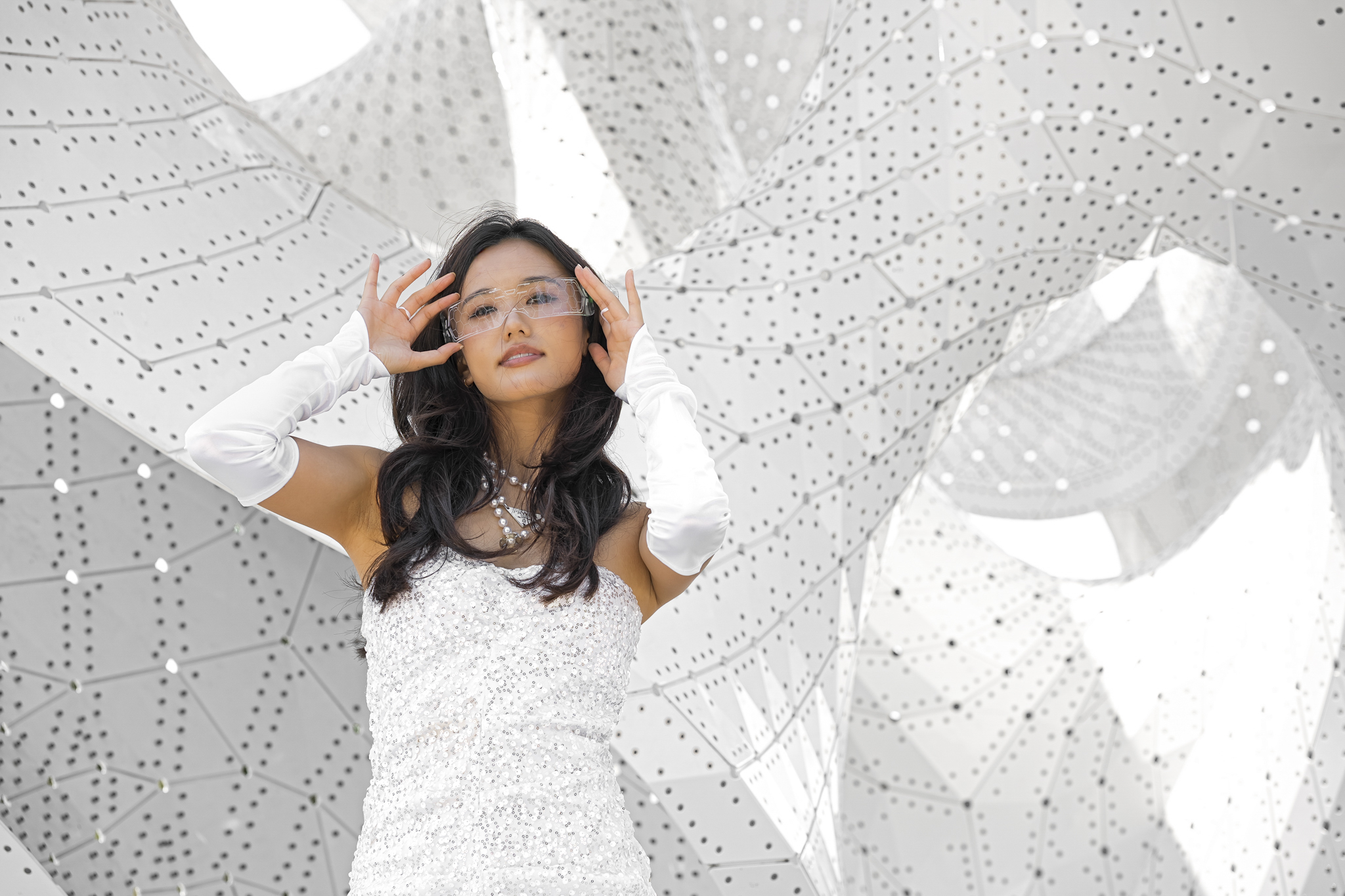
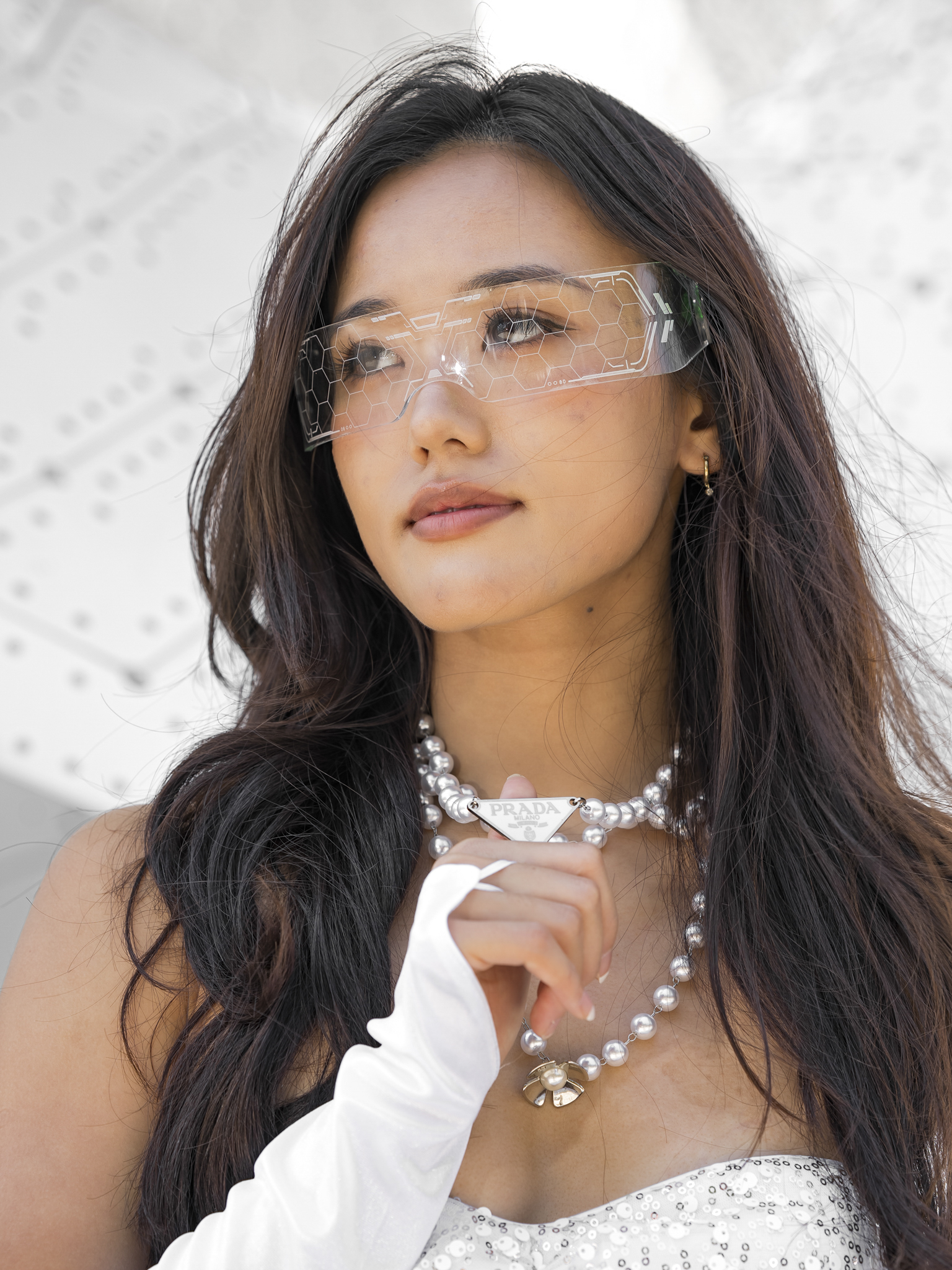
The jewelry from Butones Jewelry introduces another layer of storytelling. The strands of pearls around her neck, combined with a Prada tag, speak of tradition meeting innovation. Butones has always had a way of merging timeless elegance with modern design, and here that contrast feels poetic. Pearls, formed organically through time, stand against the precision-cut surfaces of the environment.
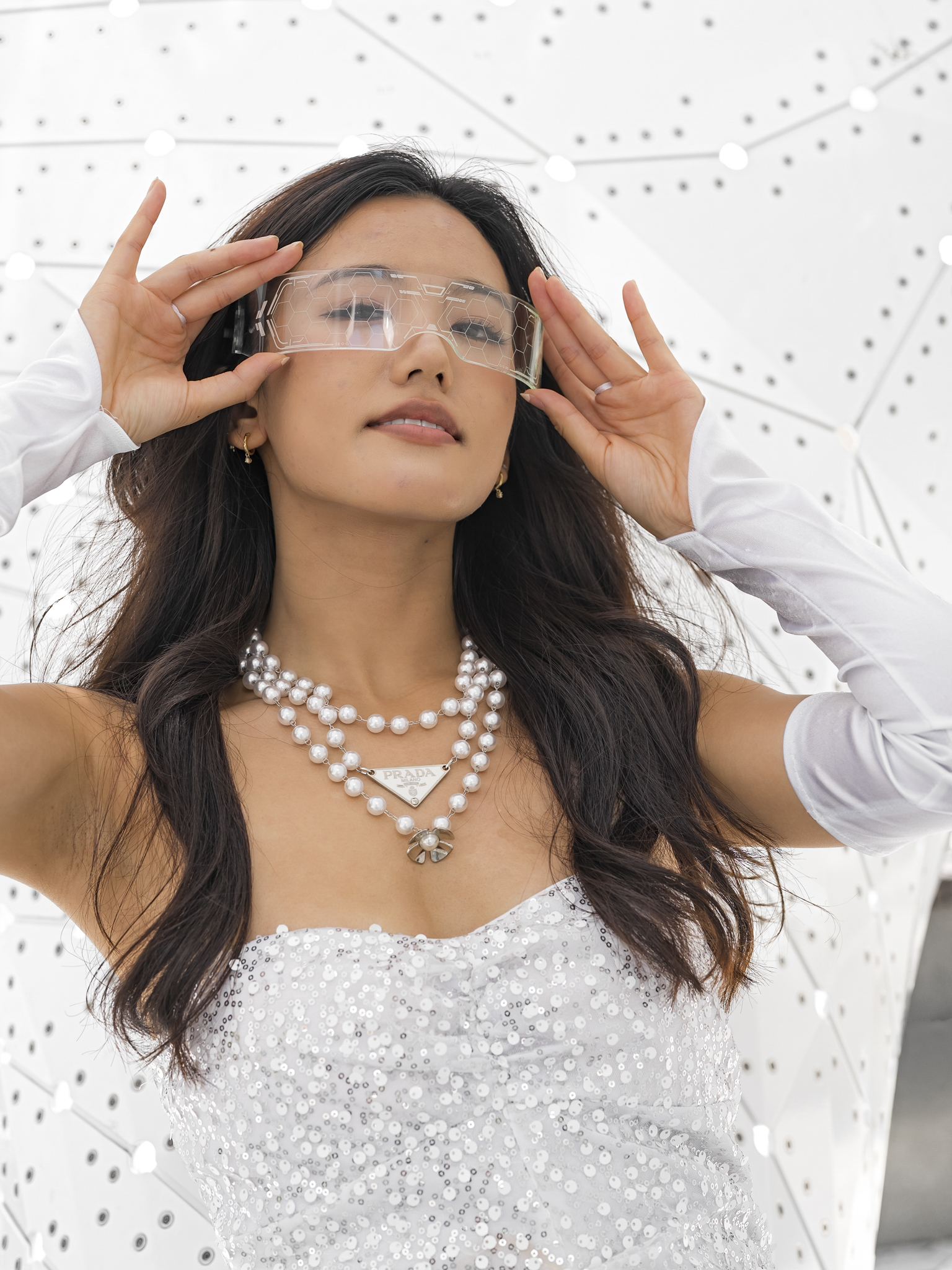
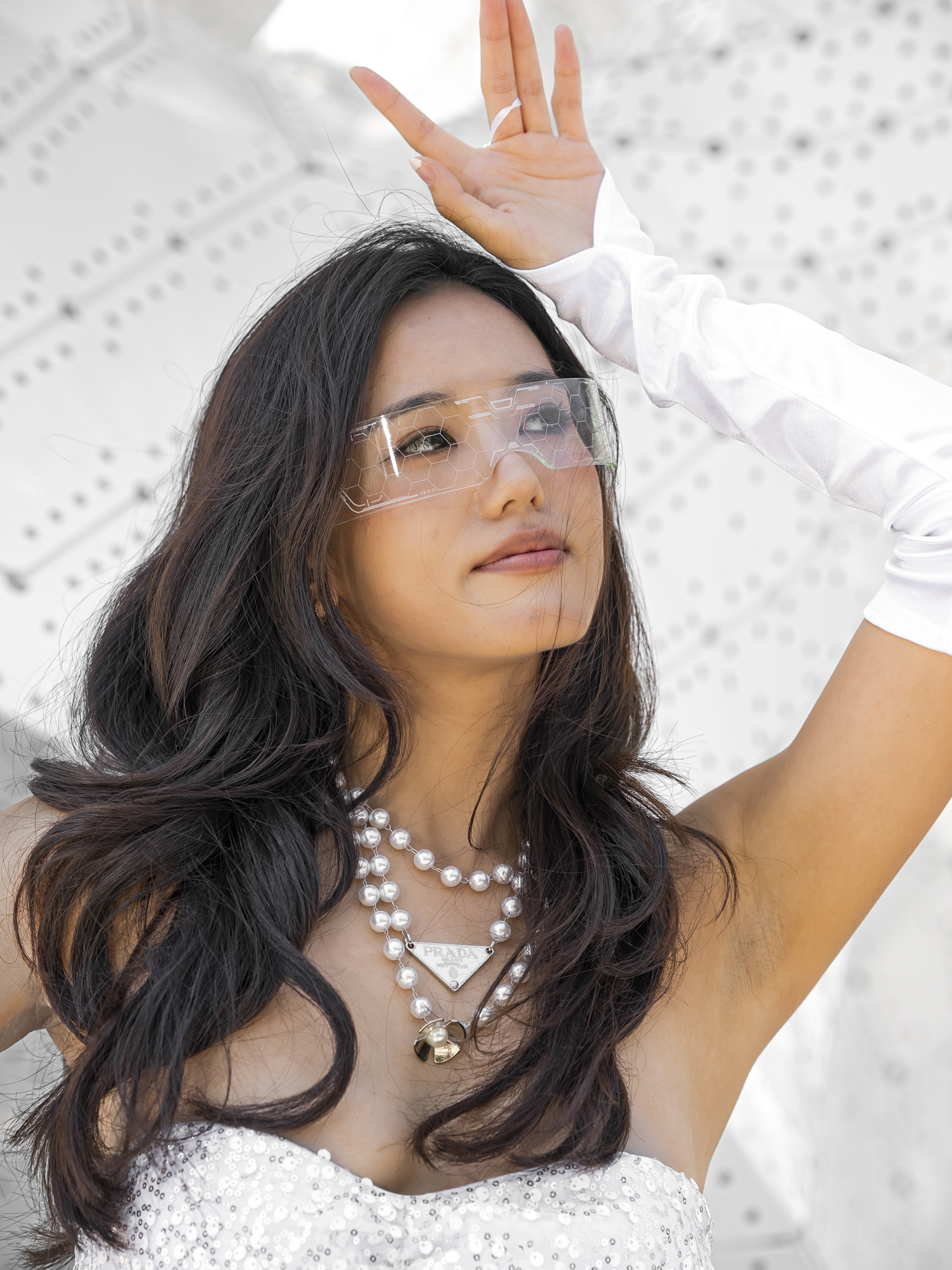
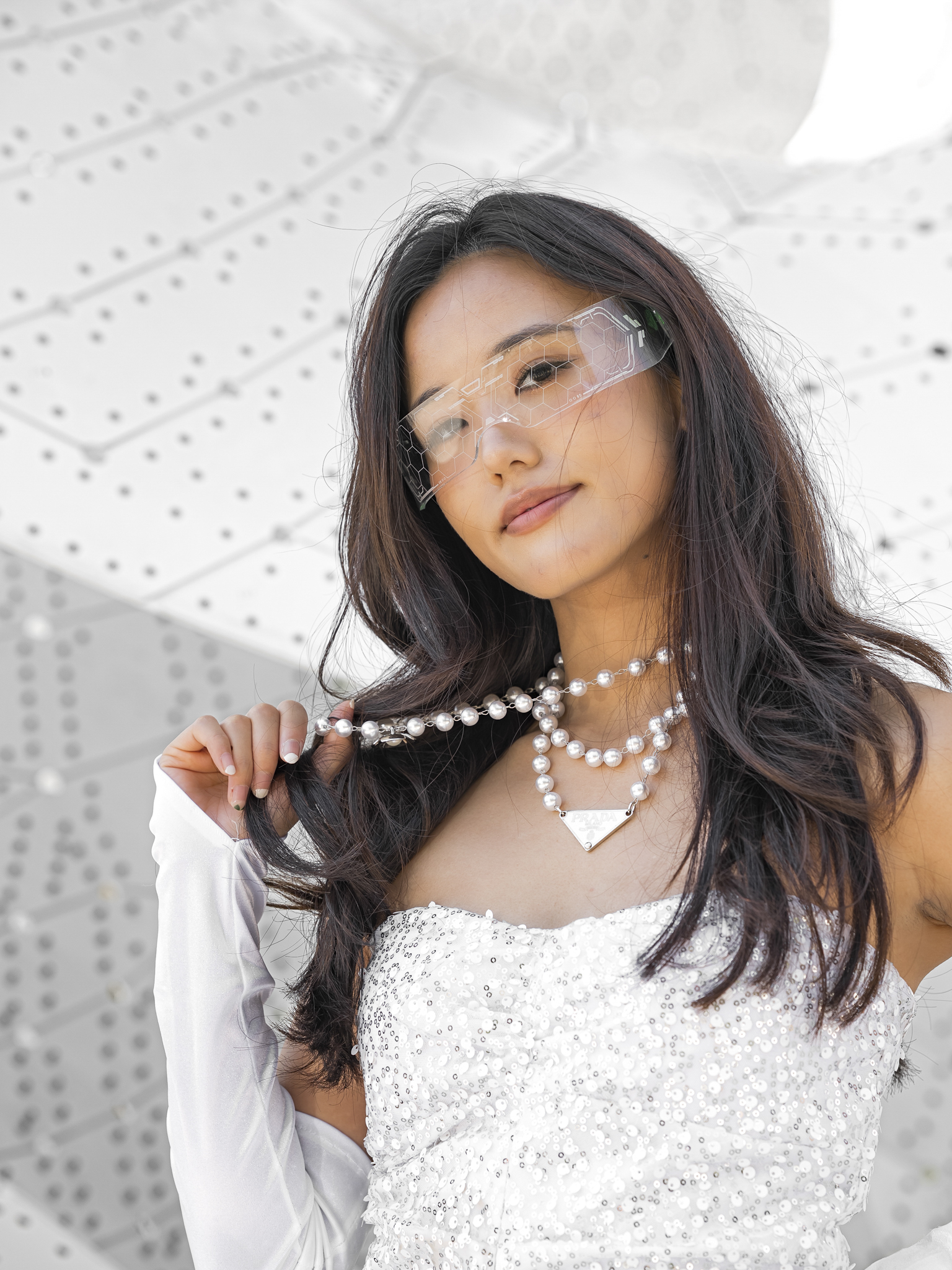
Their luster catches the light in a softer, more human way than the metallic walls. They remind us that even in a world ruled by machines, beauty still comes from imperfection, from touch, from the things we can’t quite control.
The transparent eyewear, futuristic and minimal, refracts light around her face. It becomes a shield and a lens.Not to distance her from the viewer, but to transform how we see her. It reflects the world she inhabits, one defined by transparency, visibility, and the way technology reframes our gaze.
Japanese Aesthetics and the Art of Harmony
Lately, I’ve been increasingly drawn to Japanese aesthetics as I prepare for an upcoming trip to Japan later this year. I’ve been studying how concepts like ma and shibui can inform not just design but also the emotional rhythm of my photography. Through this series, I wanted to begin interpreting those principles. Finding space in silence, and harmony in restraint.
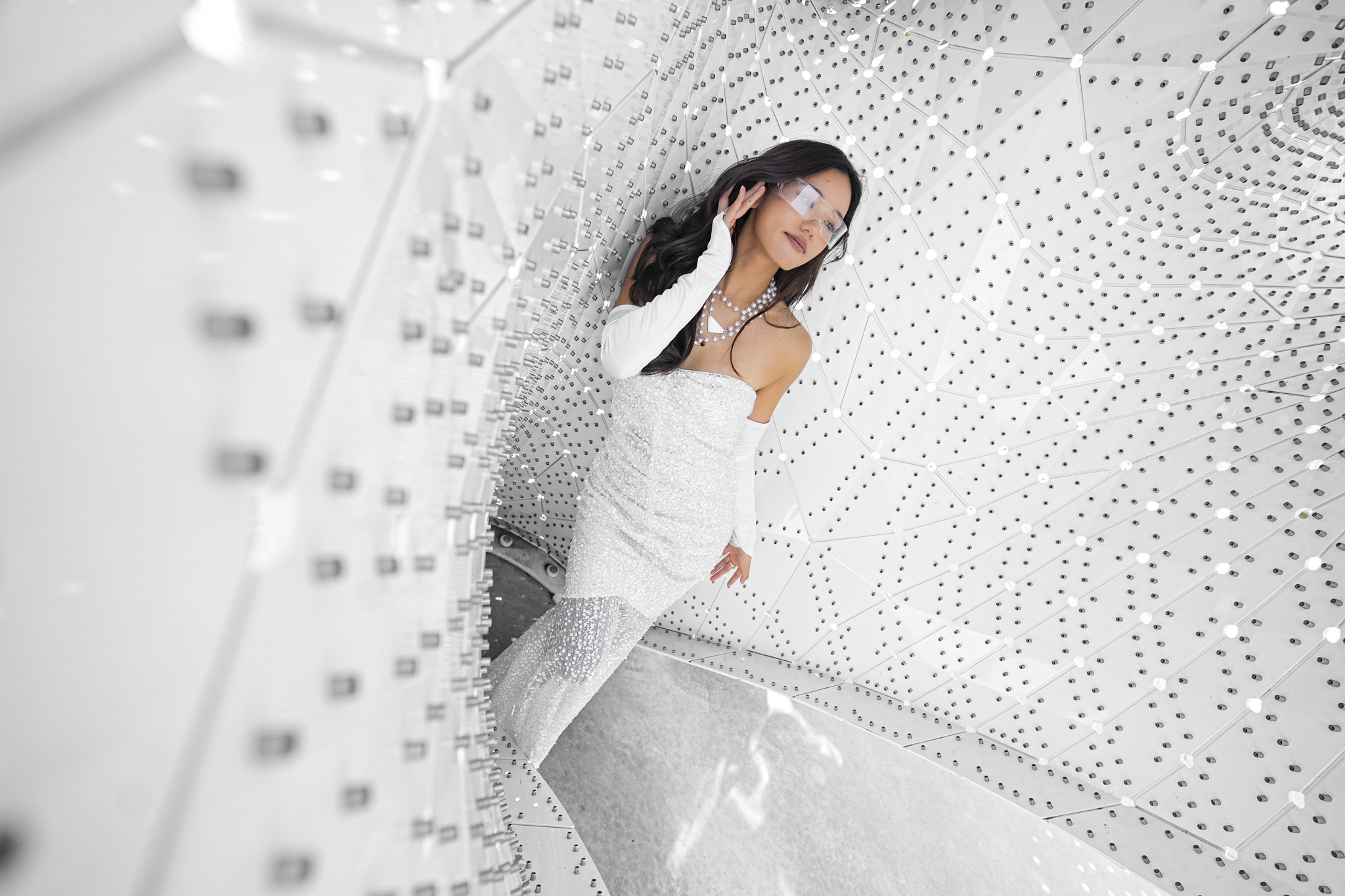
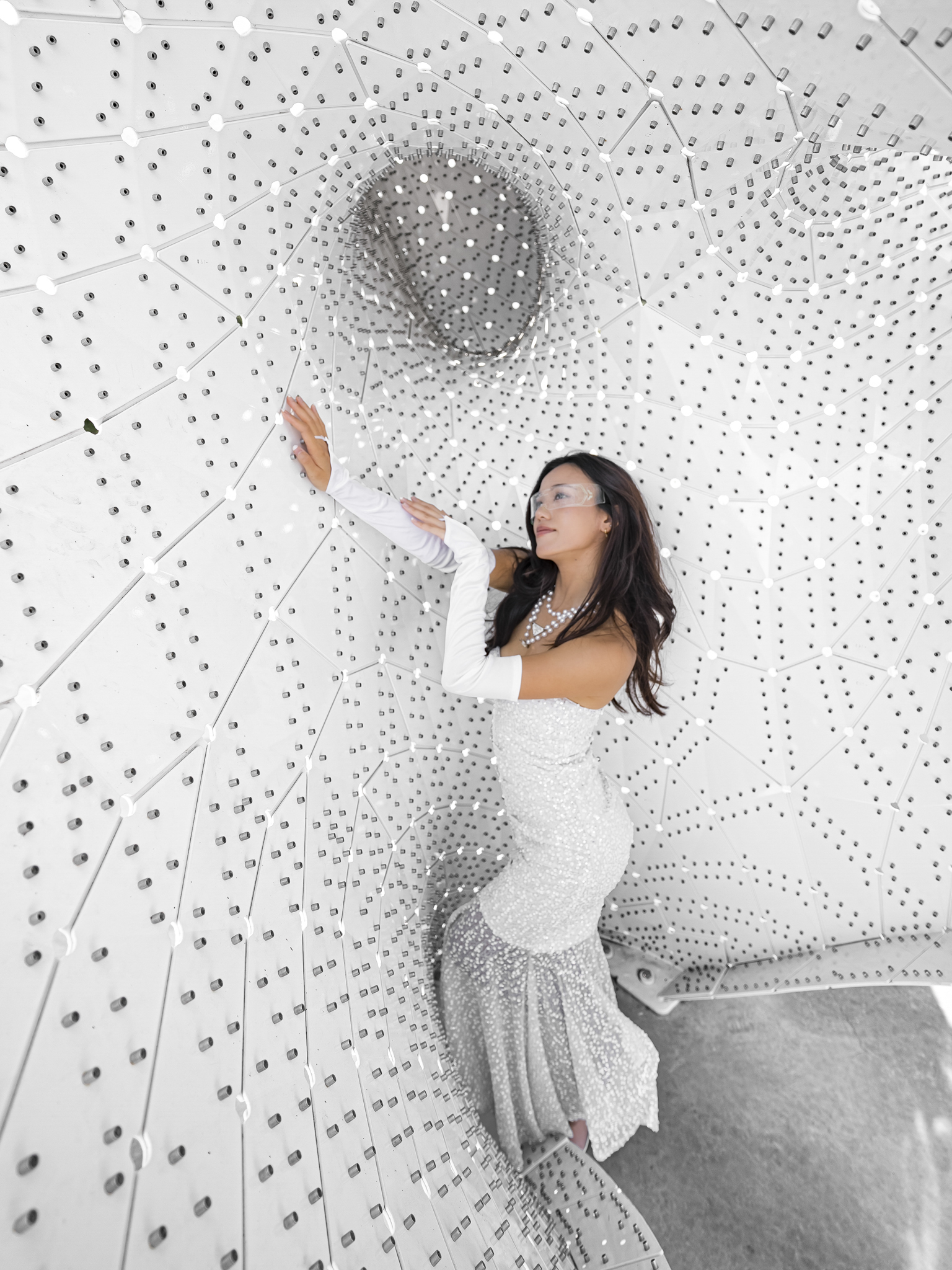

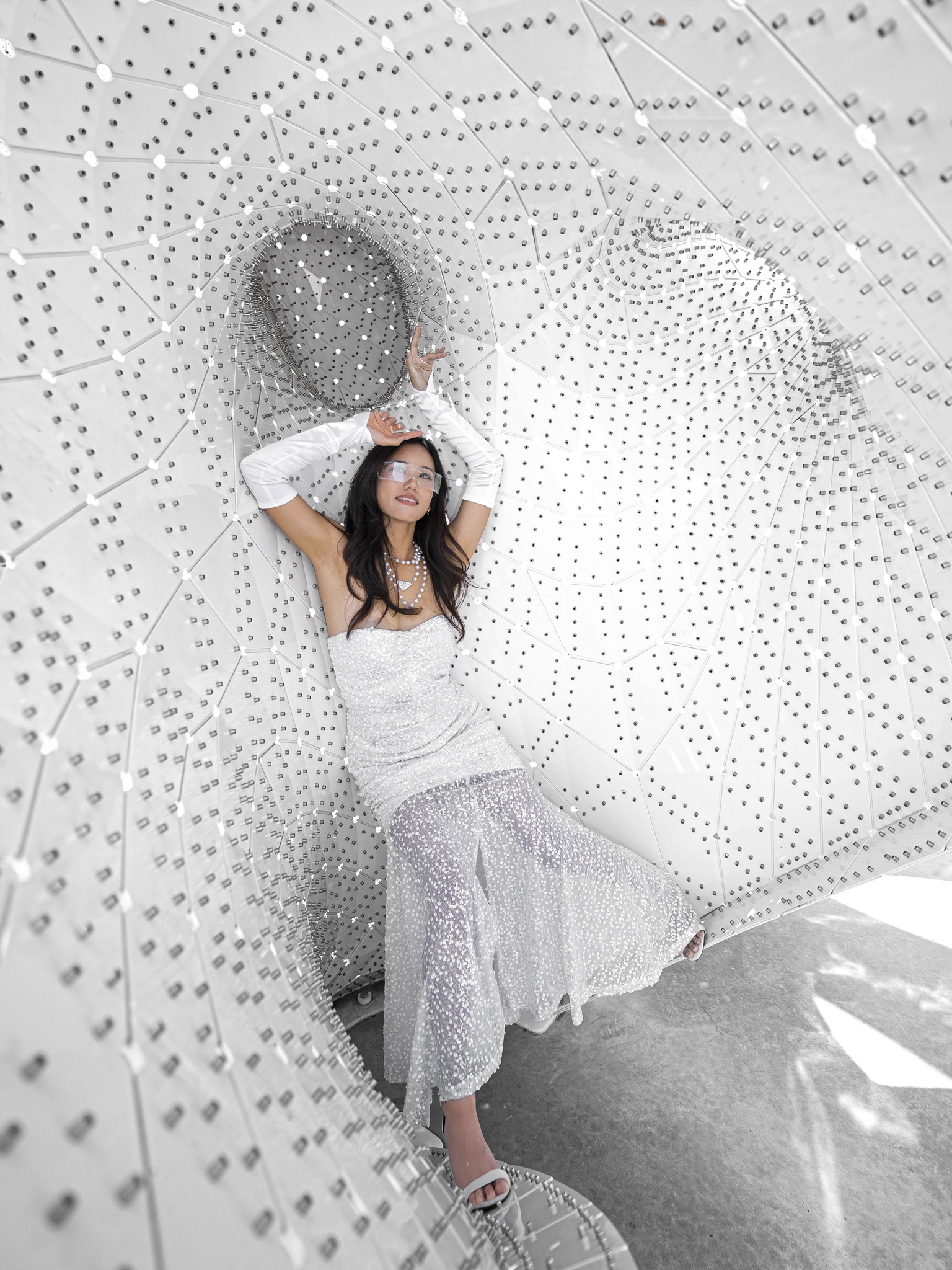
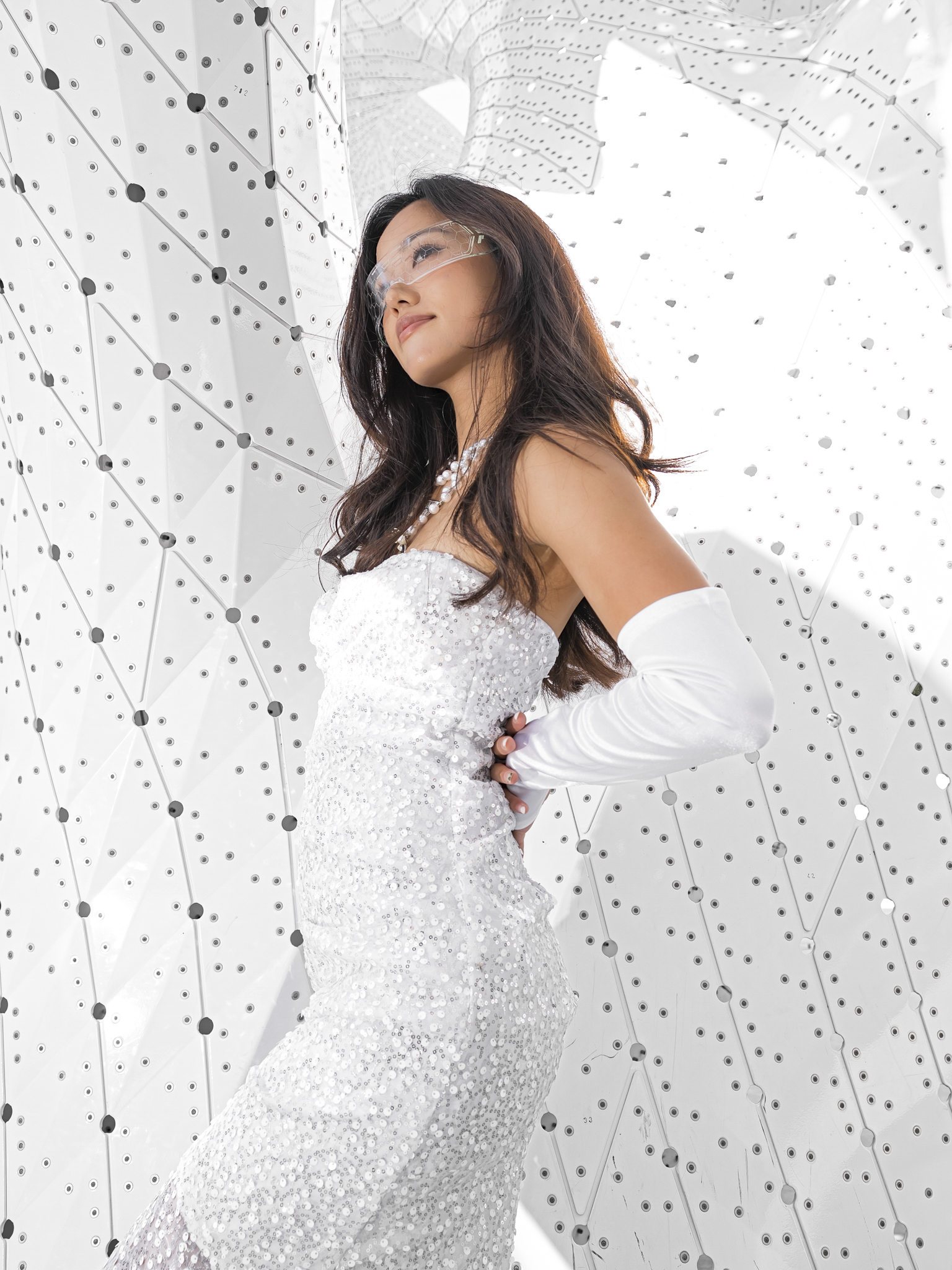
In several frames, Natalie tilts her head toward the light, her hair catching the sun like strands of silk. Around her, the sculptural installation curves and folds in a rhythm reminiscent of origami. The patterns of dots and panels evoke ma, the beauty found in space and pause. There is restraint in the palette, whites, silvers, soft greys, that recalls shibui, the quiet grace of minimalism. Every shadow feels intentional. Every reflection, a whisper.
The Japanese influence is not just aesthetic. It lives in the balance between precision and calm, between form and emotion. Even as the setting is engineered and exact, the wind catches Natalie’s hair, the sequins scatter light, the mood stays measured. Technology becomes a backdrop, and humanity remains the heartbeat.
Each image captures this dialogue in motion.
The Human Algorithm: Emotion in a Digital World
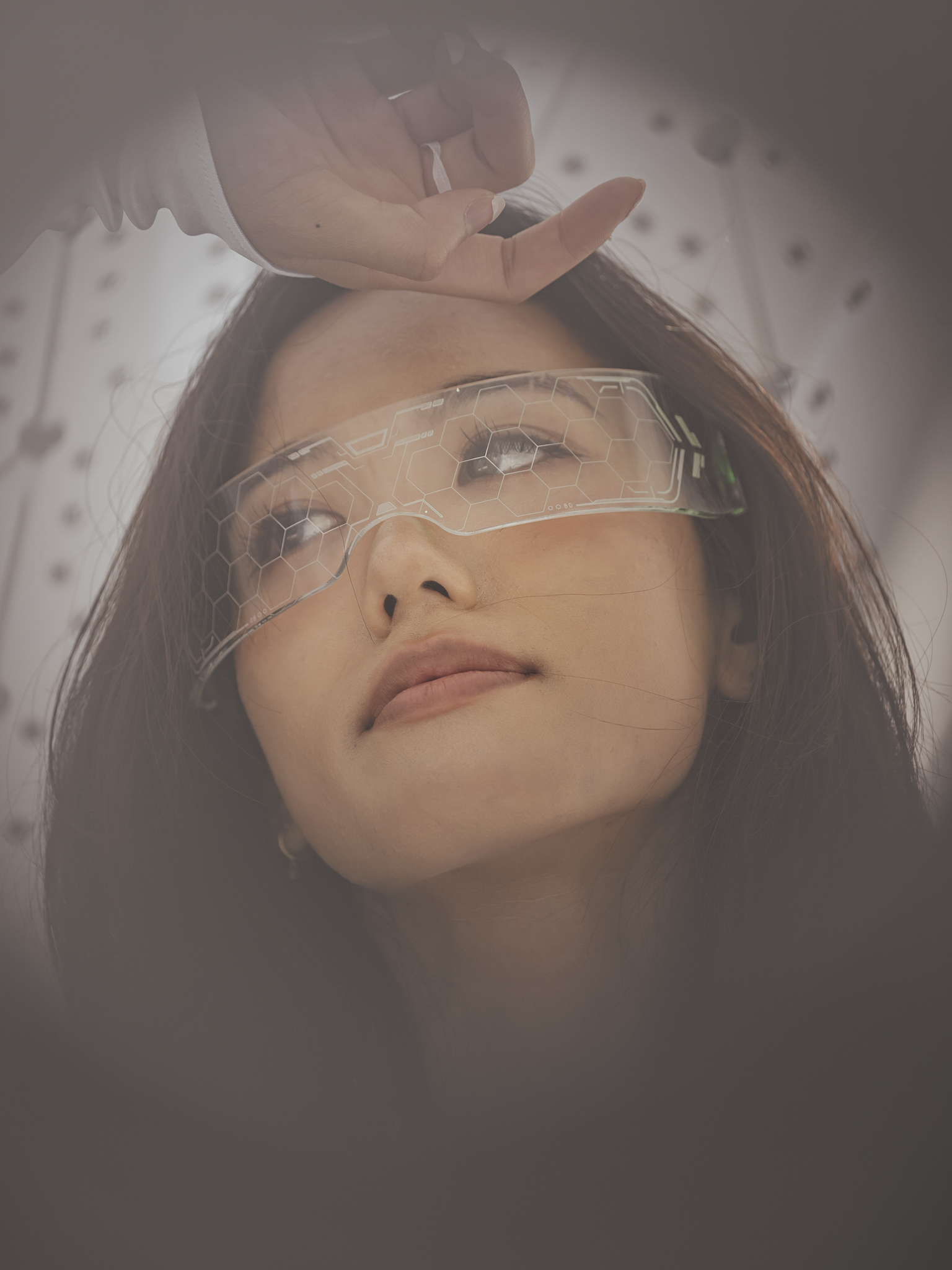
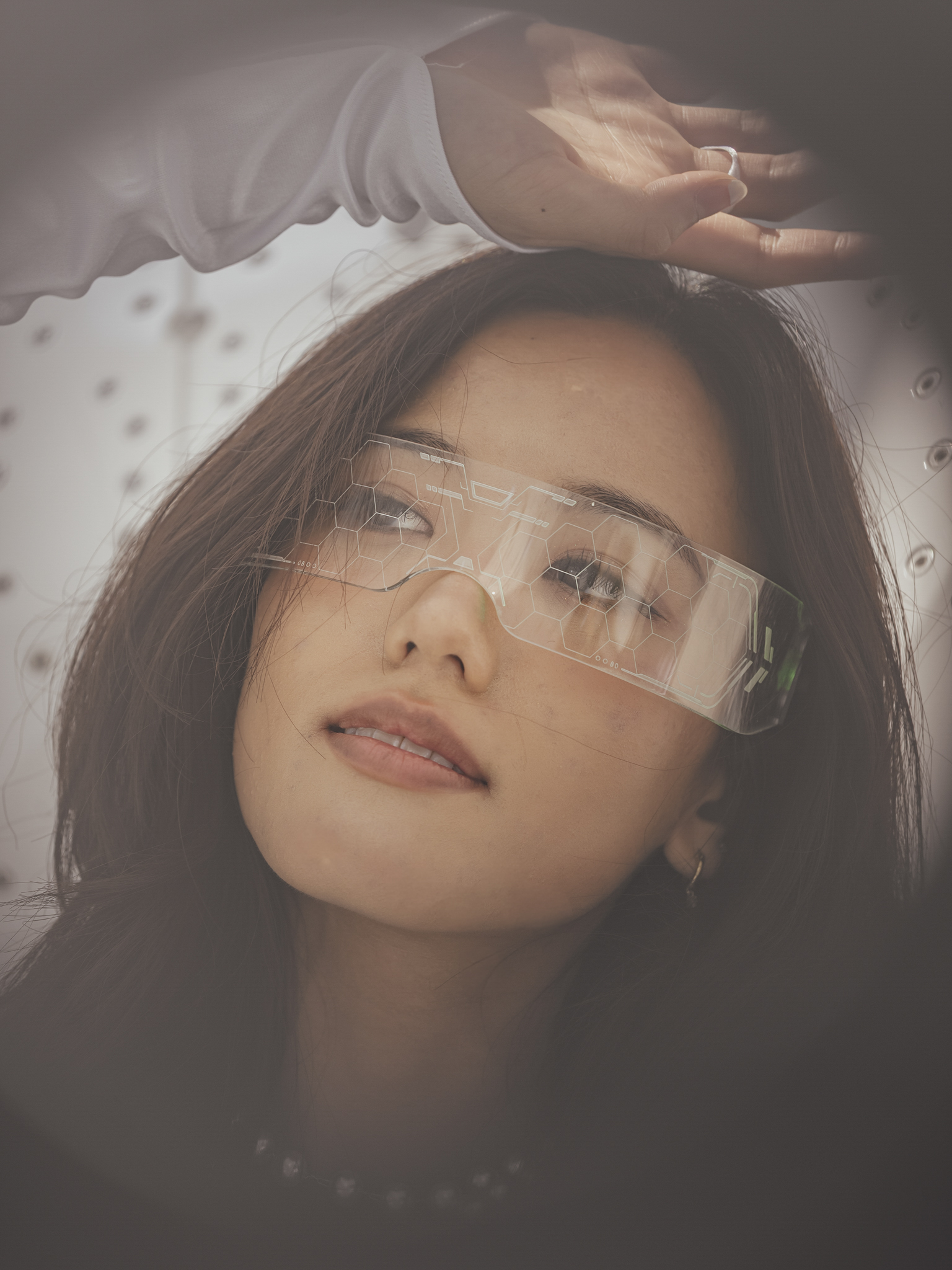
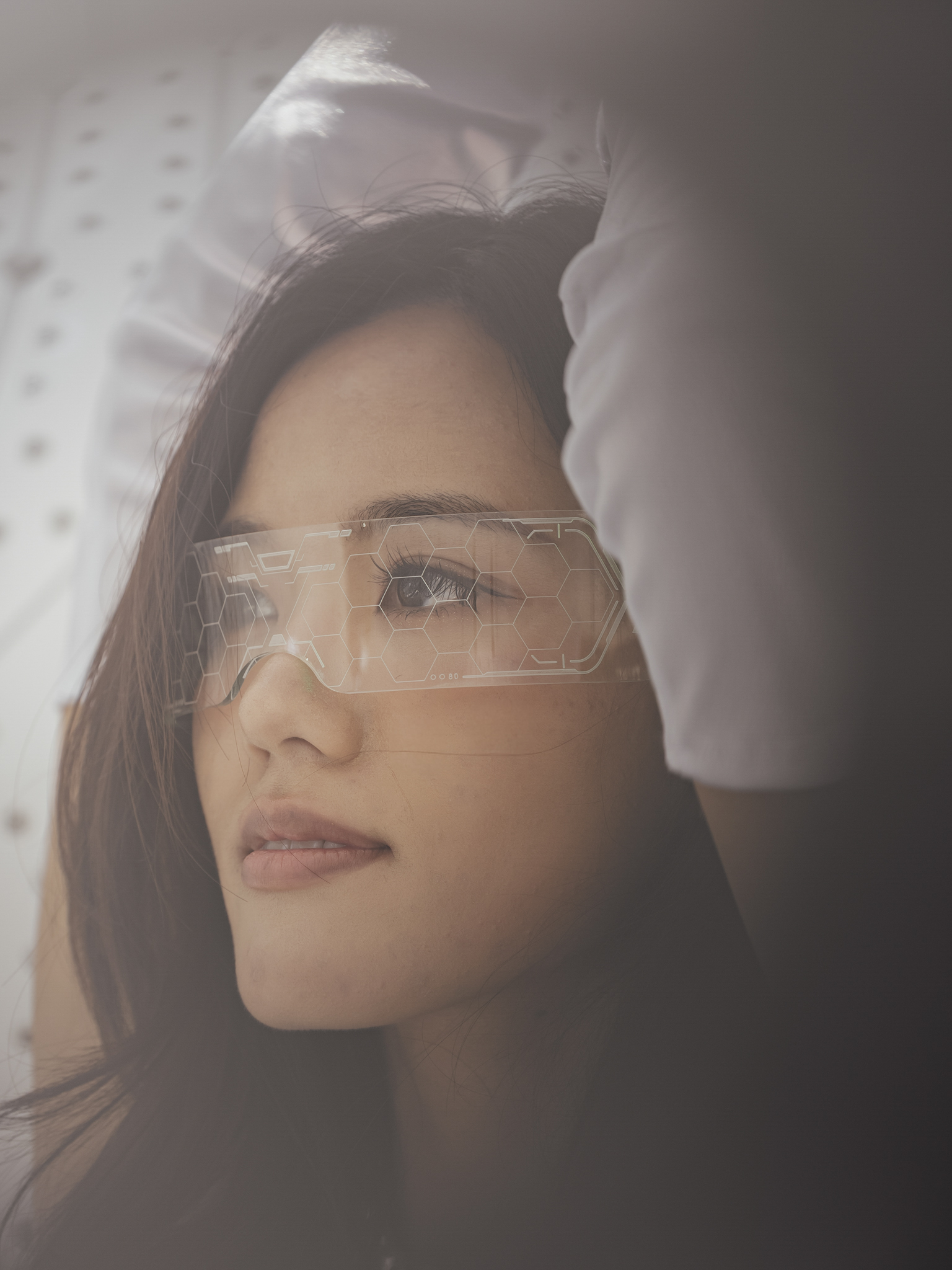
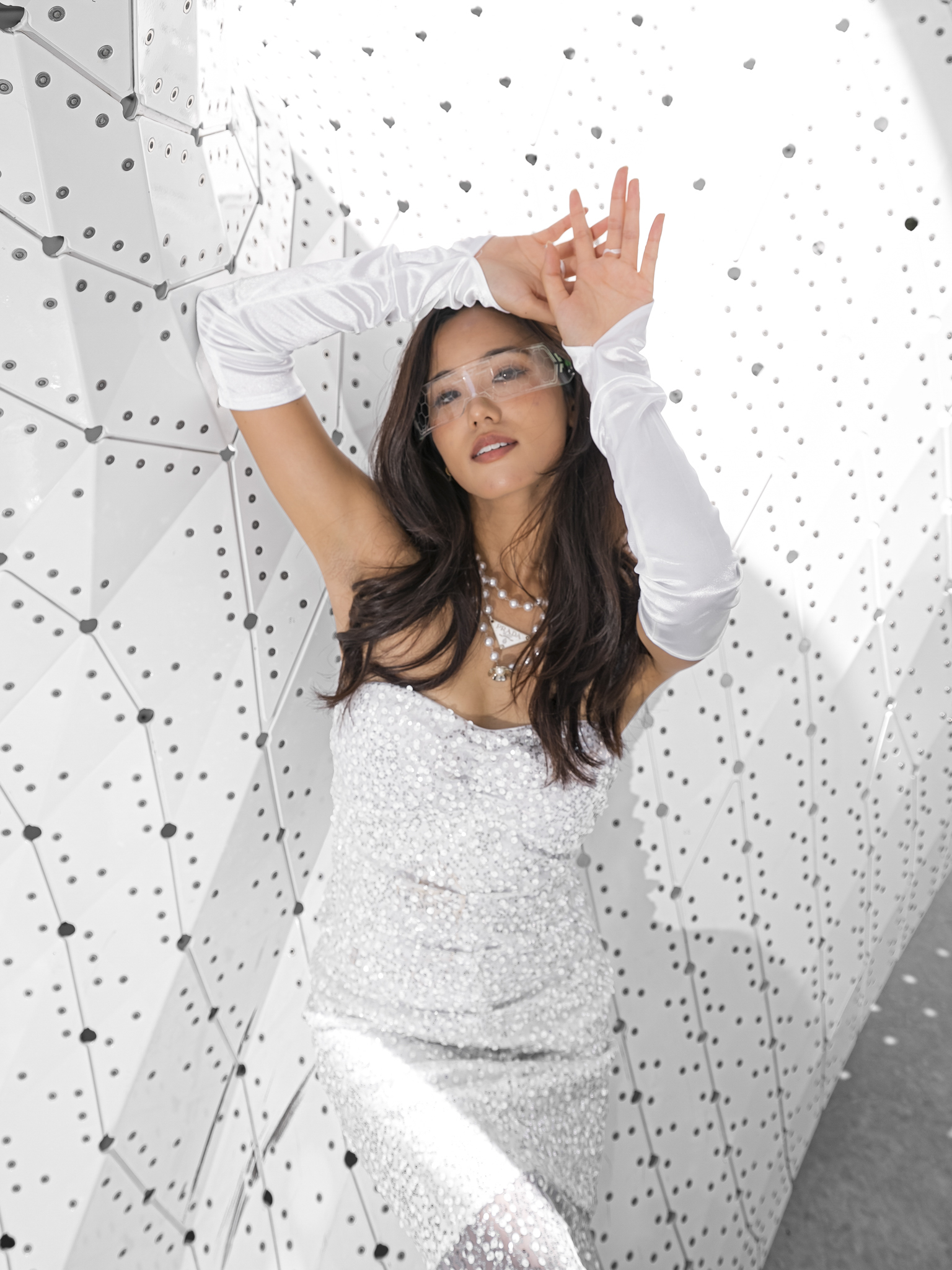
In one frame, Natalie leans gently into the wall, her fingers brushing the metal as though tracing a line of code. The touch feels deliberate. The human connecting to the mechanical, the analog meeting the digital. Her eyes, visible through the translucent glasses, hold a look of quiet curiosity, as if she’s seeing beyond the surface, into the system itself.
In another, she raises her arms overhead, light cascading down the sequins of her dress. The architecture curves around her in a spiral of perforated steel, framing her like a digital halo. The dress becomes part of the structure, and the structure becomes part of her.
Then there’s the moment of stillness. Her gaze lifted, her expression soft, her pearls glowing against the white light. This is where fashion transcends adornment. It becomes identity. And technology, stripped of code and circuitry, becomes language. One that expresses creativity, aspiration, and wonder.
From Code to Couture: Fashion as Living Technology
As I photographed Natalie, I found myself reflecting on how this interplay mirrors the world we live in. We design tools to simplify life, yet they often end up shaping us. We build systems to connect us, yet what truly connects us is the very thing that can’t be replicated. Emotion.

Fashion, too, is a form of technology. Every stitch, every textile innovation, every reflective surface is a product of design thinking and experimentation. It adapts, evolves, and responds to culture. Technology, meanwhile, learns from us, refining through iteration much like couture evolves through fittings. They are, in many ways, parallel art forms. Both defined by vision, by touch, by the endless pursuit of refinement.
What makes this collaboration special is that Natalie embodies both worlds. She is the bridge. The living expression of fashion meeting engineering, of elegance meeting intellect. Her poise, her understanding of form and structure, her ability to move within this architectural maze with both confidence and softness. All of it brings the concept of fashion and technology to life in a way that feels deeply personal.
This shoot was never just about the clothes or the setting. It was about capturing an idea: that the future of fashion is not synthetic but symbiotic. That design, when guided by intention, can reflect both innovation and soul.
Marc Fornes’ The Orb: When Art Becomes Architecture
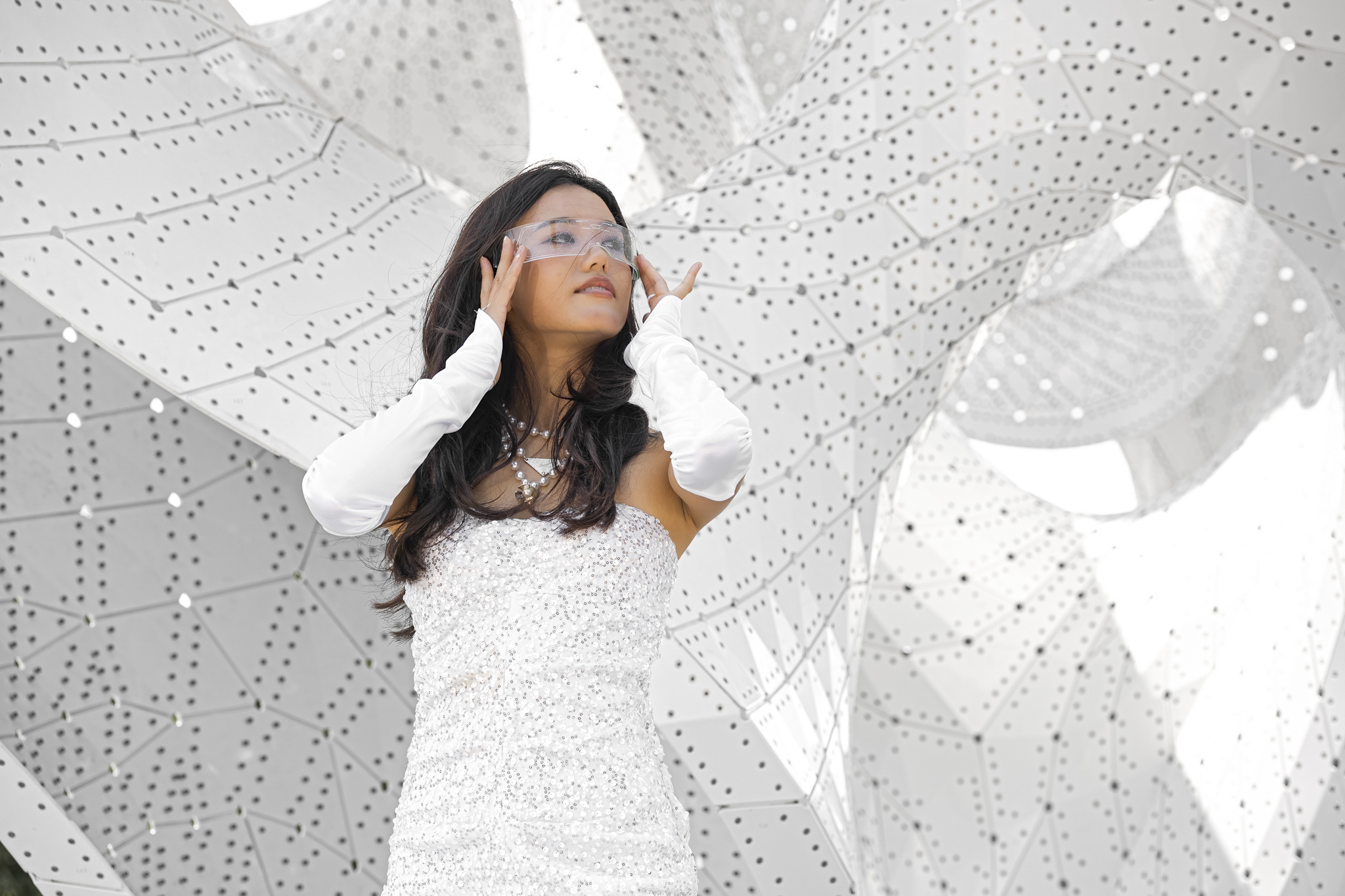

The structure that surrounded us, created by artist Marc Fornes and his New York-based studio THEVERYMANY, added another dimension to this dialogue between fashion and technology. Fornes is known for his experimental approach to blending art and architecture, using computational design to craft large-scale, self-supporting structures made from thousands of ultra-thin aluminum components. His process, where algorithms generate thousands of unique, interlocking pieces, transforms code into form and data into sculpture. Each curved panel, each riveted stripe, becomes part of an organic skin that holds itself together through geometry and precision.
These works, called Crawling Assemblies, embody the idea of strength through curvature. The intricate perforations scatter light, producing patterns that shift through the day and turn luminous at night. Standing within this structure felt like entering a living algorithm. A place where technology breathes art into architecture. The perforated aluminum filtered the light into delicate dots that danced across Natalie’s sequined dress and pearls, mirroring the dialogue between human expression and digital precision.
Fornes’ design philosophy, moving from code to structure, resonated with the spirit of our shoot. Like fashion, his work is about transformation, iteration, and the creation of immersive experiences that invite reflection and engagement. His structures blur the boundaries between art and architecture, just as this series blurs the line between fashion and technology. Together they create not just a backdrop but a conversation between innovation, design, and the human desire to connect through creativity.
Photoshoot Credits
- Model: Natalie Sheu
- Jewelry: Butones Jewelry
- Wardrobe: Kisau Clothing Collection
- Photographer: Paul Tocatlian
For brands, designers, models, and creatives looking to explore the intersection of art, technology, and storytelling, I’d love to collaborate. Contact us. Let’s create images that don’t just reflect the future but help define it.
© Paul Tocatlian. All Rights Reserved.
 Kisau Photography