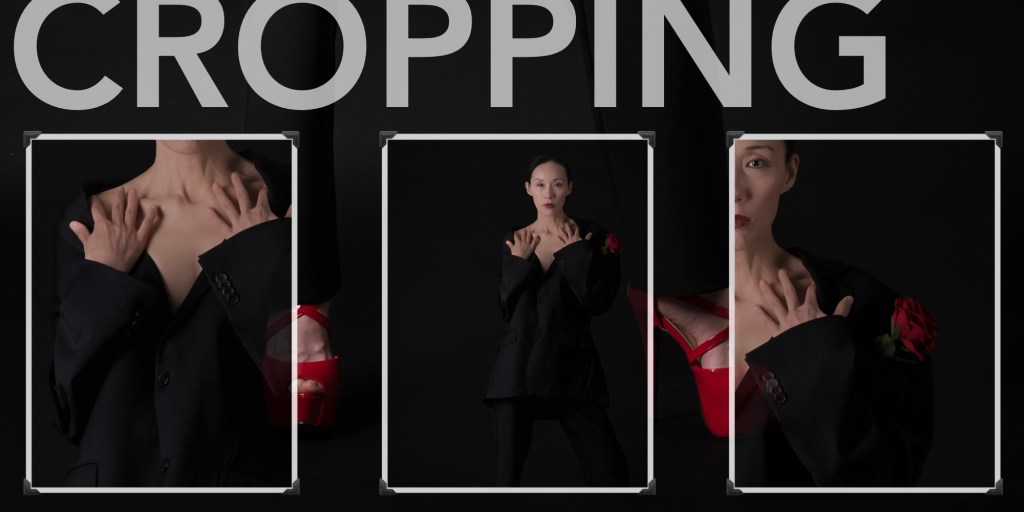
I used to think cropping happened at the end.
A cleanup step. A little housekeeping. Tighten the frame, remove the extra, call it done.
I do not see it that way anymore. Thanks to Ted Forbes, I began to see cropping as part of the story, not just the finish.
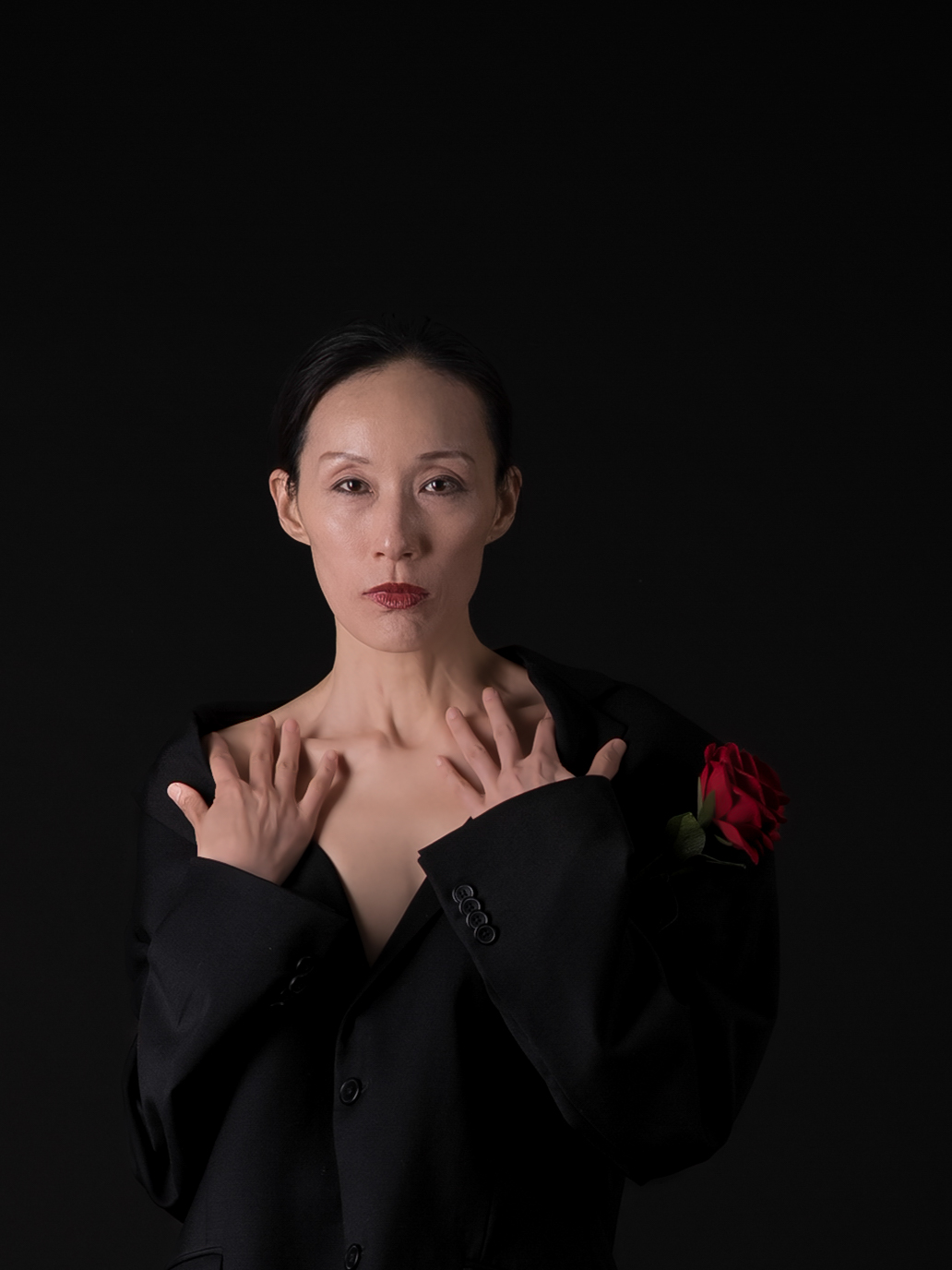
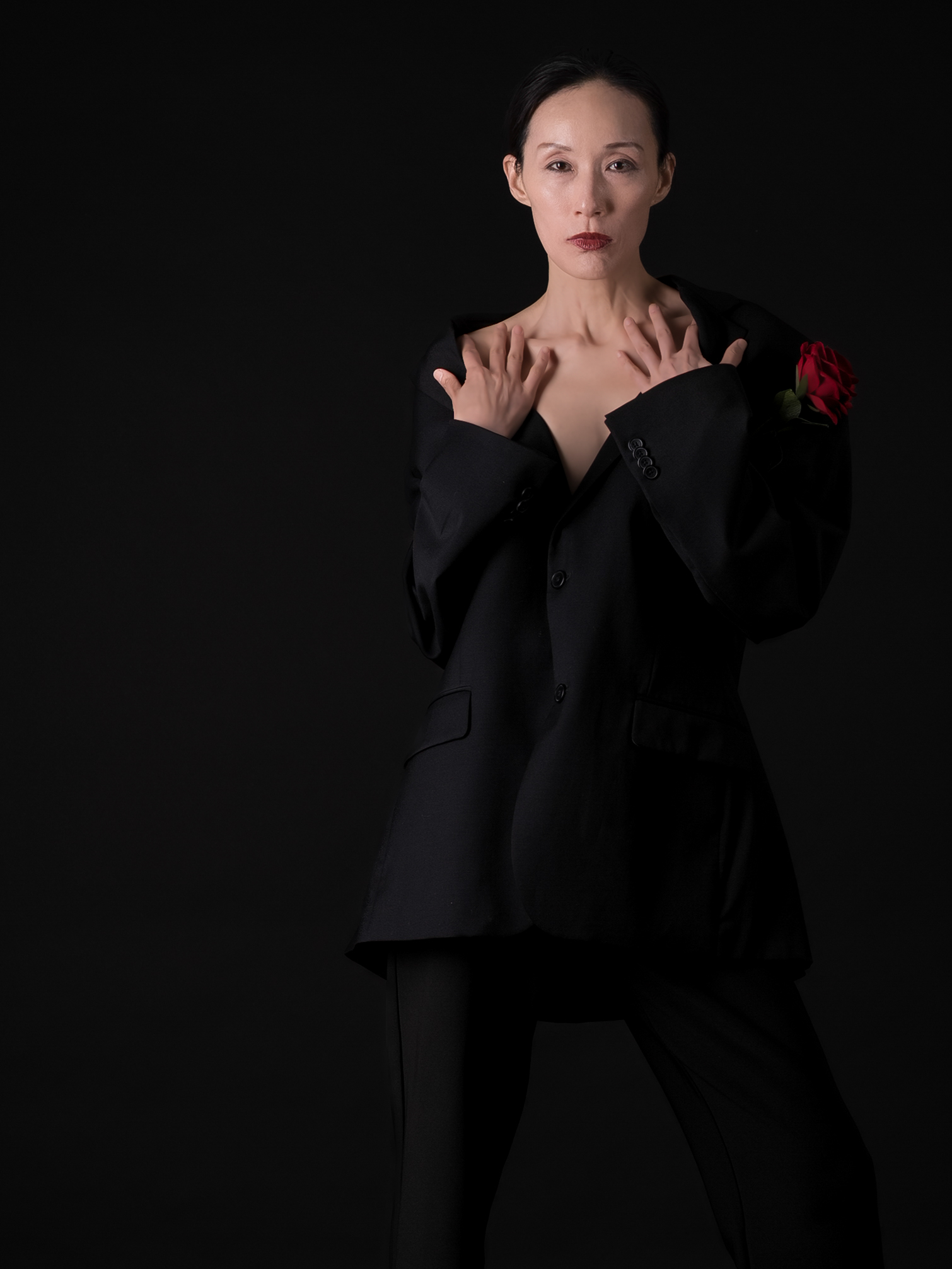
Looking at these images of Jing Su, cropping feels less like correction and more like authorship. It is where the photograph stops being a record of what was in front of the lens and starts becoming a statement. The frame tells the truth. Not by showing everything, but by deciding what deserves to stay.
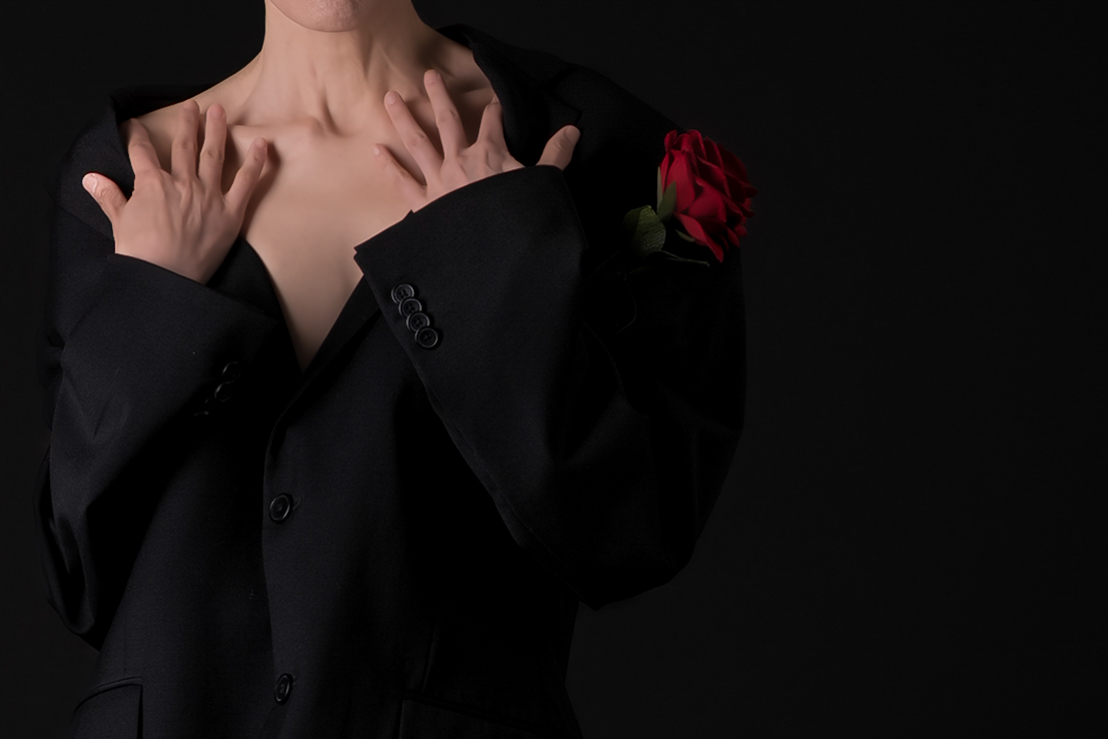
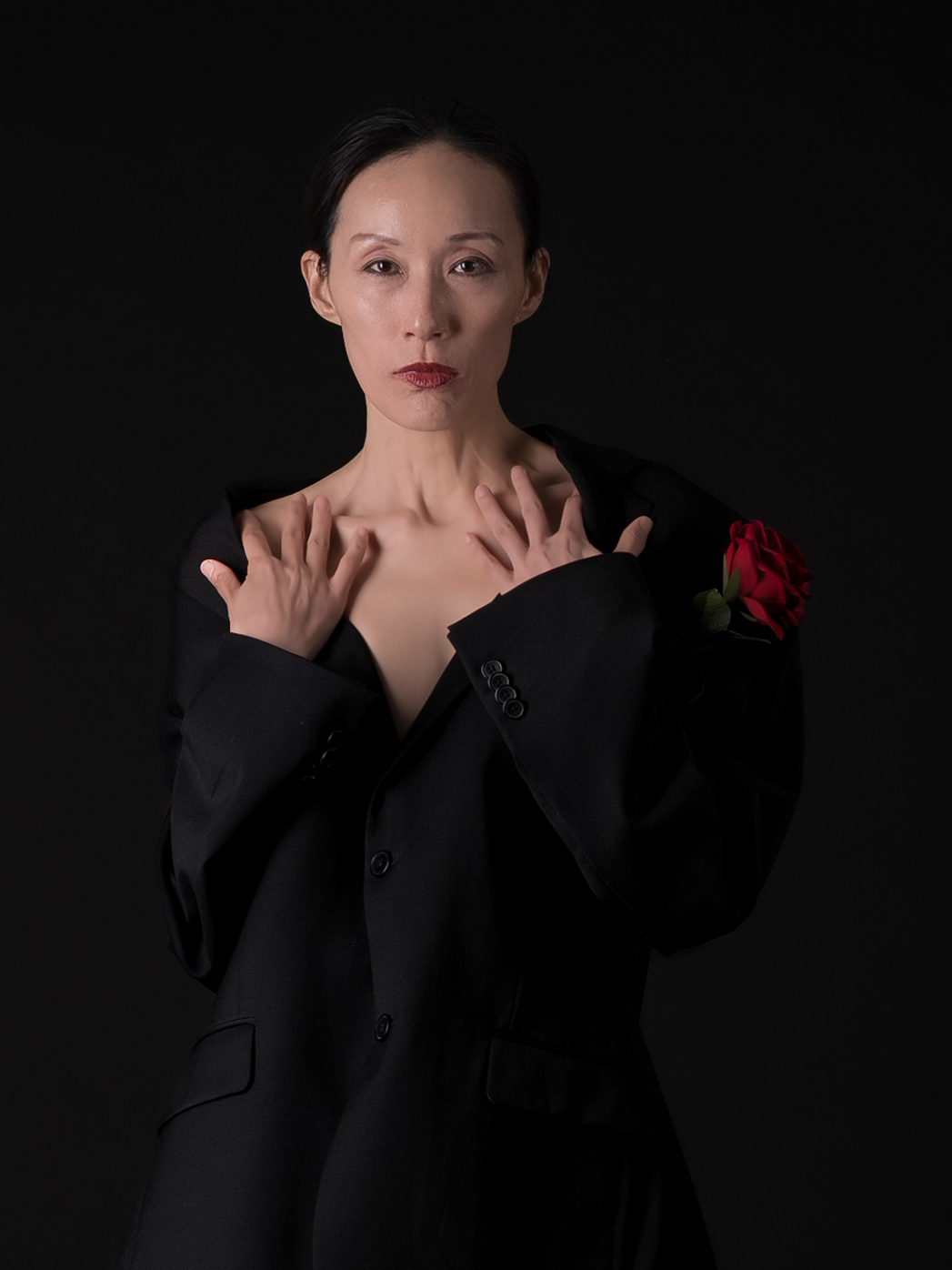
What strikes me first here is how much power lives at the edges.
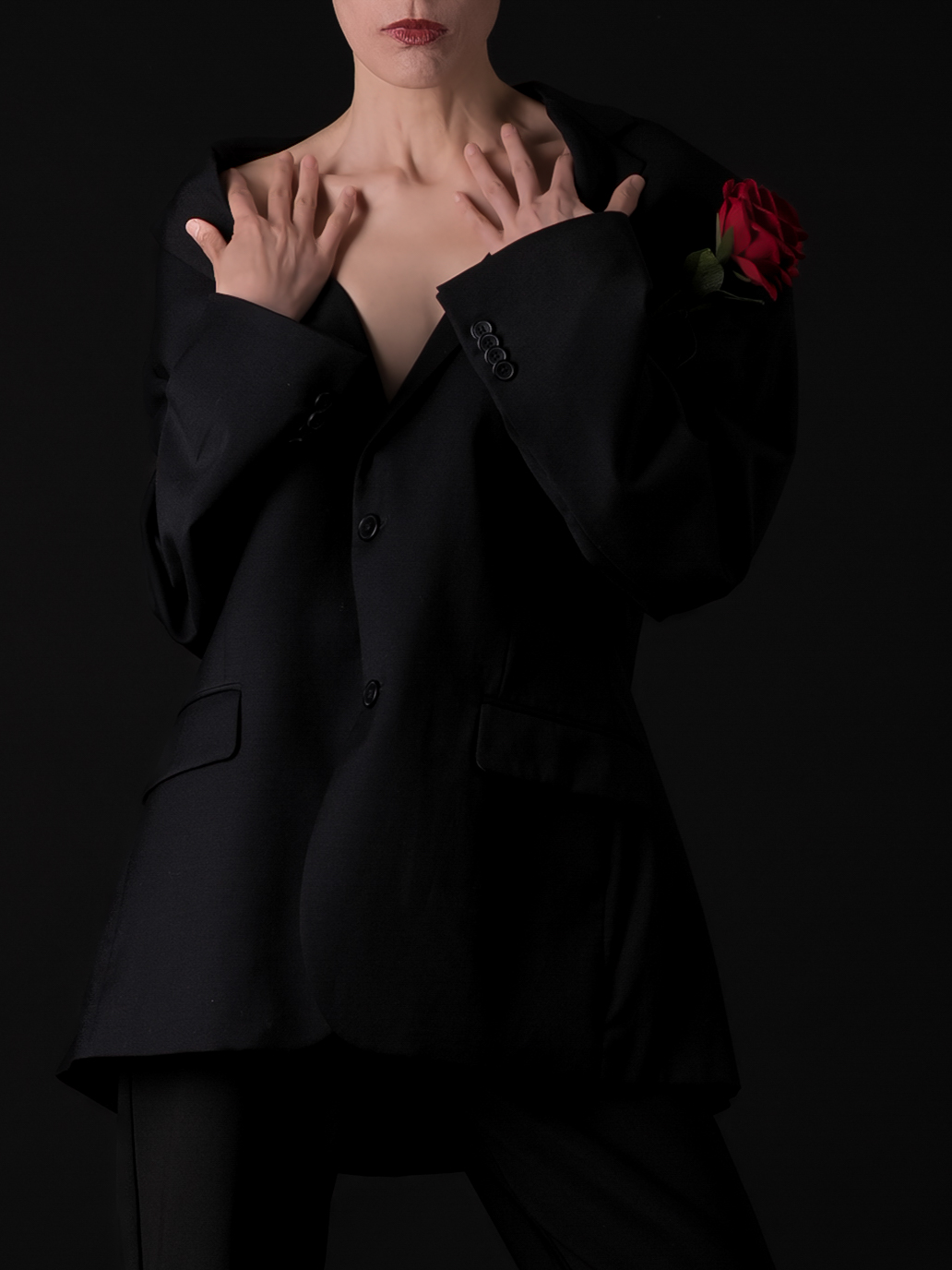
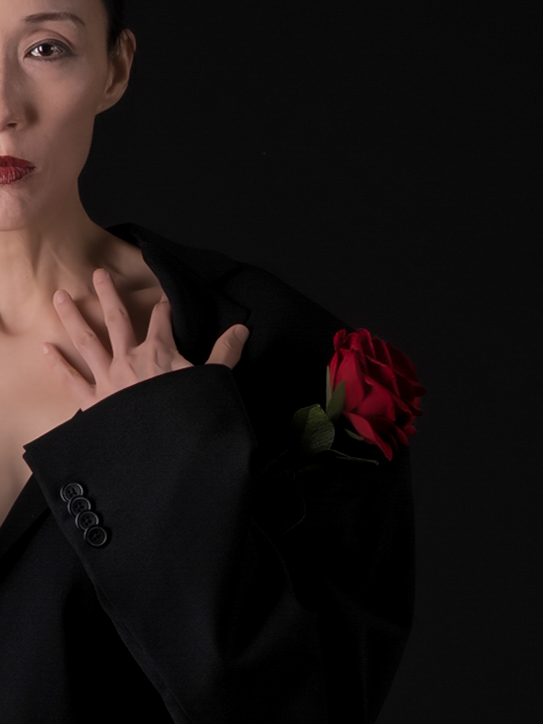
In the tighter crops, the hands, the collarbone, the mouth, the rose, they all begin to carry different emotional weight. The image of the hands near the collarbone feels intimate and tense. It pulls the body into fragments, and suddenly the gesture becomes the story. Not the full look. Not even the face. Just tension. Skin against dark fabric. Fingers placed with intention. A kind of restraint that feels almost theatrical.
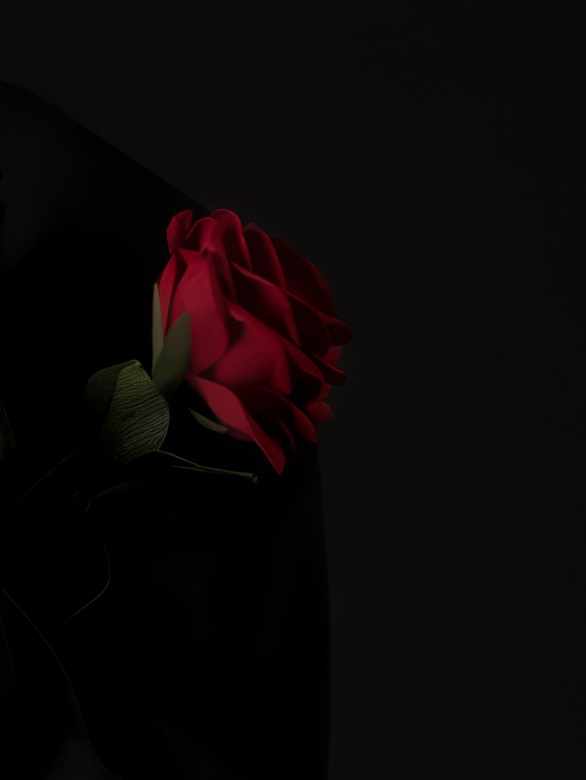
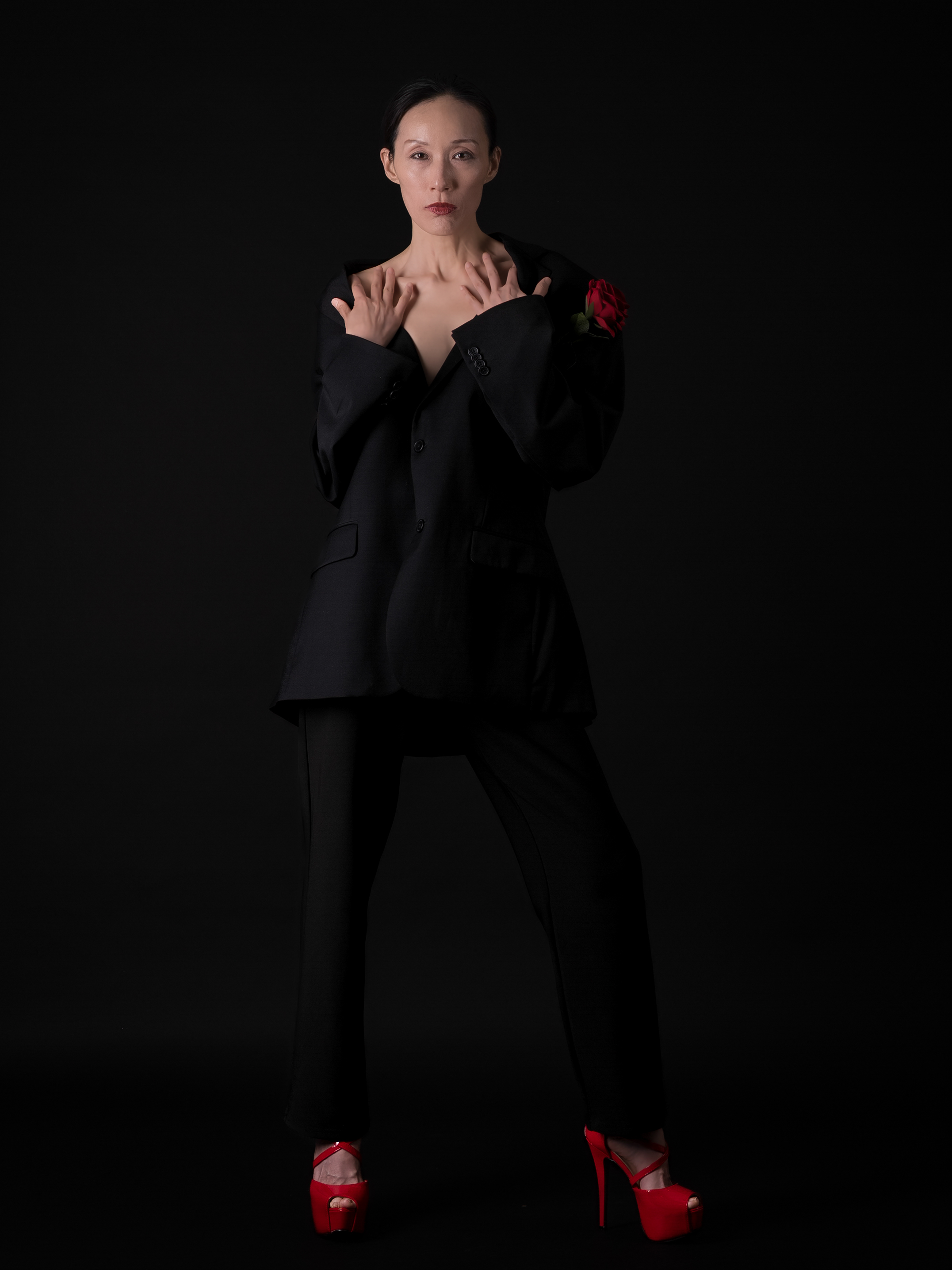
Then the crop widens and the rose enters with more authority. That changes everything. The red is no longer a detail. It becomes a pulse. A signal. A disruption inside all that black. The suit is quiet. The background is quiet. The pose is controlled. But the rose refuses to whisper. That is the kind of anchor I keep looking for in a frame. One note of heat inside a restrained composition.
The wider portraits do something else. They create distance, and with that distance comes posture, silhouette, and attitude. The oversized jacket starts to speak. The negative space starts to matter more. In one frame, the figure sits lower and smaller inside all that darkness, and the emptiness above her becomes part of the emotion. It does not feel unused. It feels loaded. It gives the subject presence by refusing to crowd her. That is the difference between empty space and intentional space. One feels accidental. The other feels like breath held on purpose.
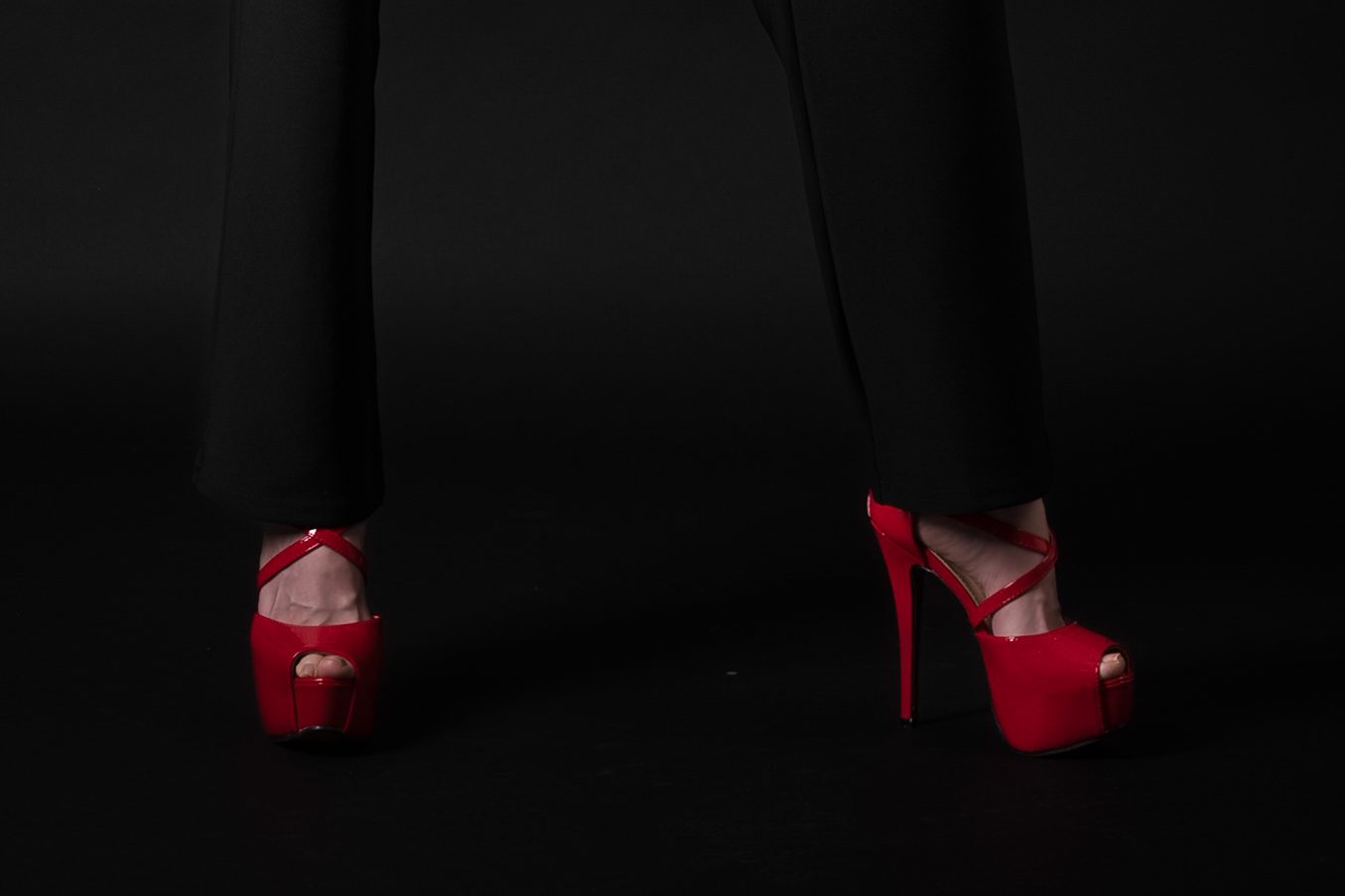
I keep coming back to the edge studies too. The close crop of the rose alone. The partial crop with only half the face and the rose. The single red shoe at the bottom of the frame. Those are not leftovers. They are lessons. They show how a photograph can survive disassembly. Maybe even become more precise because of it. When the full figure disappears, the symbolism gets louder. The rose becomes less about styling and more about interruption. The shoe becomes less about wardrobe and more about punctuation.
That is why I look at the edges before I look at the subject.
I want to know what is leaking energy. What is asking for attention without earning it. A frame can have a beautiful center and still fail because of a careless corner. A sleeve too close to the border. A bright shape that catches the eye first. A crop that feels timid instead of deliberate. The edges tell me whether the image is disciplined.
Then I look at the negative space.
In these photographs, the black background is doing real work. It is not just absence. It is pressure. It isolates the subject, sharpens the red accents, and gives the body room to exist as shape. In the strongest frames, the darkness feels active. It pushes back. It makes the figure feel carved out of shadow. That kind of space is worth protecting.
Then I look for the anchor.
Here, it is obviously the red. The rose. The shoes. The lipstick. Each one acts like a visual spark, but they do not all do the same job. The rose feels emotional. The shoes feel graphic. The lipstick ties the body back to the face and keeps the color story from feeling random. That repetition matters. It gives the eye a path to follow.
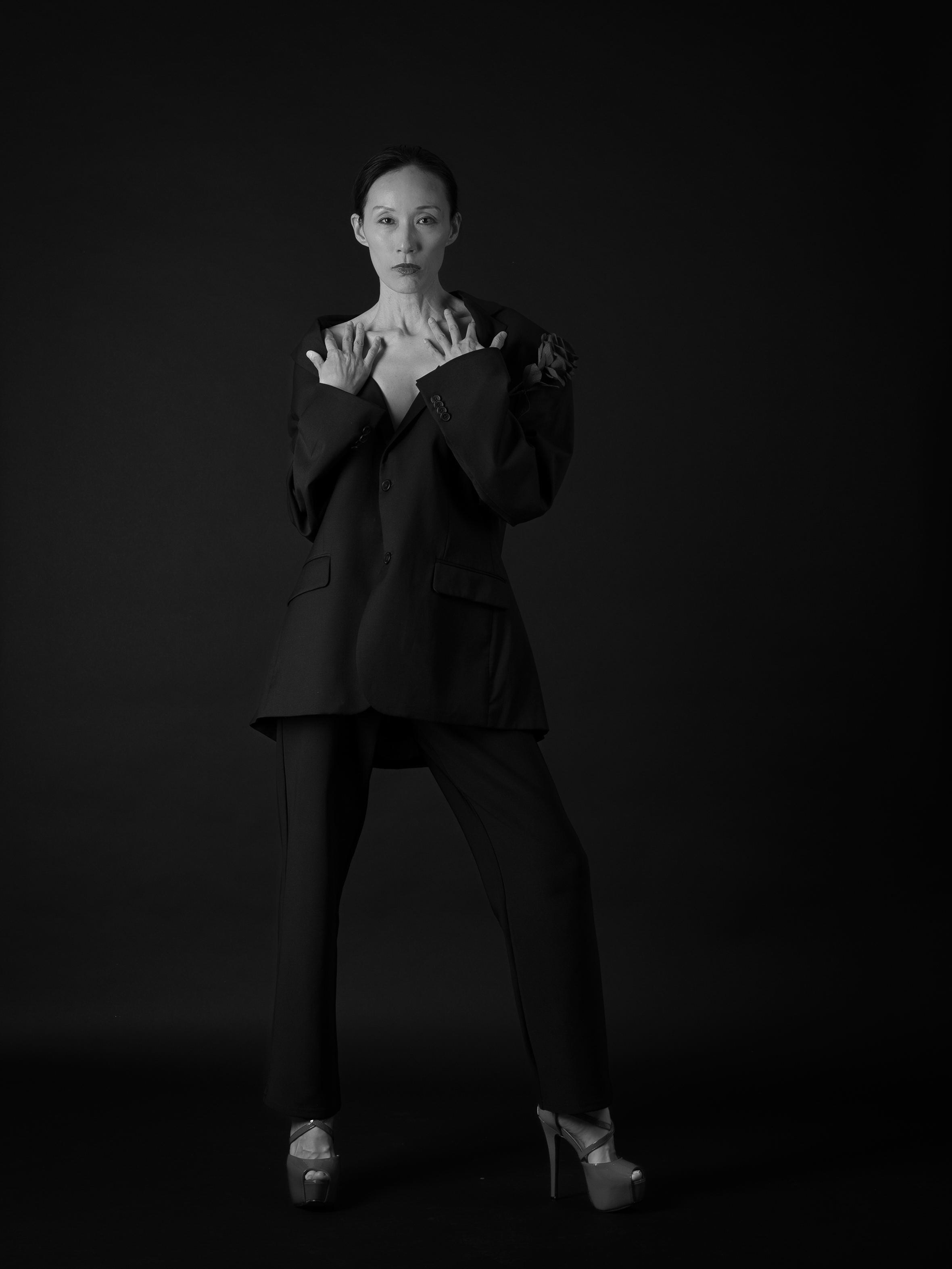
And when I still cannot decide, I turn to black and white.
That last frame proves why. Once the red is removed, the image has to stand on shape, contrast, gesture, and structure alone. The question becomes brutally simple. Does the photograph still hold? Does it still have tension? Does it still have bones? If the answer is yes, color was supporting the image. If the answer is no, color was carrying it.
That is the honesty cropping gives us.
It forces us to admit what the picture is actually about.
Not what we meant. Not what we remember from the shoot. Not what styling cost or how hard the lighting setup was. Just what is true inside the frame.
And sometimes what is true is not the full portrait.
Sometimes it is the hand.
Sometimes it is the rose.
Sometimes it is the shoe.
Sometimes it is the silence around the subject that finally lets the image breathe.
Cropping does not just remove. It reveals.
So now when I reframe a photograph, I ask different questions. What needs protection? What is pretending to matter? What can be cut without mercy? What detail is carrying the emotional temperature of the frame?
Because the final image is not always the one that shows the most.
It is the one that knows what to withhold.
Photoshoot Credits
- Model: Jing Su
- Wardrobe: Kisau Clothing Collection
- Photography: Paul Tocatlian
For brands, designers, models, and other creatives looking to create inspiring imagery, let’s connect. From fashion editorials to runway coverage to publishing your work, let’s explore how fashion and storytelling intersect, and where your next project might lead.
© Paul Tocatlian. All Rights Reserved.
 Kisau Photography