
Most of us meet one another at the surface. We notice clothes, posture, expression, and the way someone carries themselves. We gather a few details and begin forming a picture before either person has said very much.
But how much can a first impression tell us? What might we discover if we approached people with curiosity instead of certainty? If someone trusted us enough to reveal more, would we let what we found change us?
These questions offer one way into this portrait story with Selina Tan. The photographs move through three spaces in Taipei, but together they can also suggest an emotional journey. It begins with connection, moves into the stories hidden beneath the surface, and ends with the growth that can come from meeting others with curiosity.
Key Takeaway
Connection can begin with curiosity, deepen through attention, and become meaningful when it changes how we see the world around us.
At the Threshold: First Impressions in Taipei
What becomes possible when we approach someone with curiosity?
A door can tell us two things at once. There may be something on the other side, but we cannot enter unless it opens. That tension runs through the first part of the series.


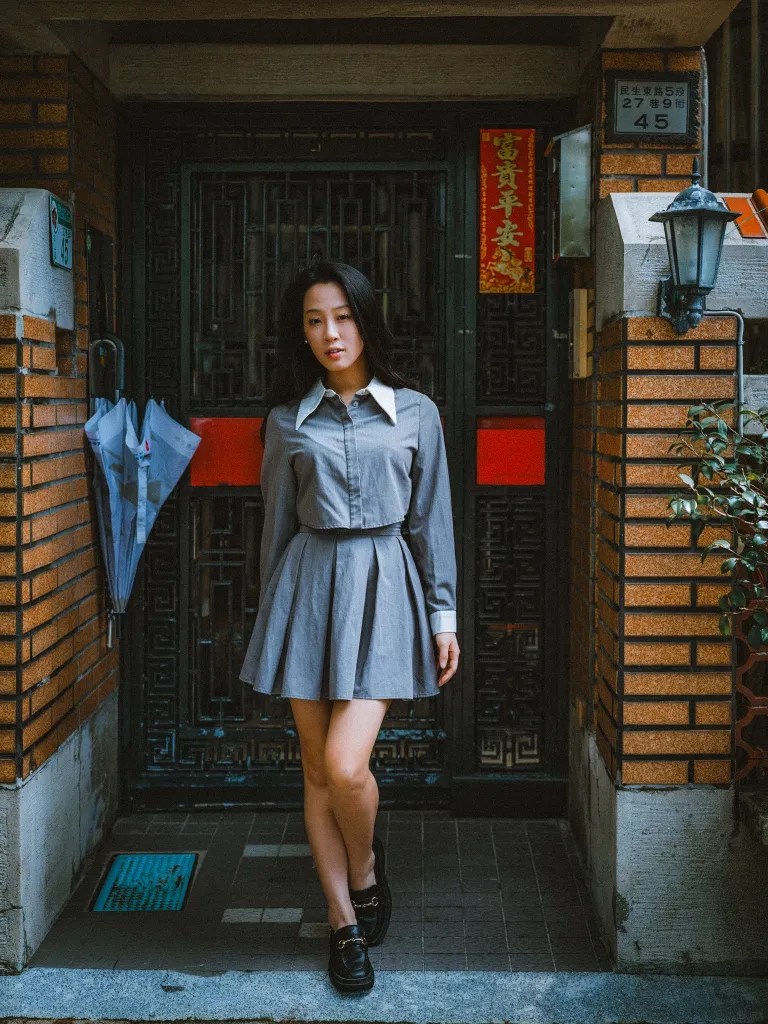


Selina Tan begins beneath a closed silver shutter with no obvious way forward. As the photographs continue, the neighborhood becomes more inviting. Plants frame the gates, red decorations brighten dark metal, and brick, tile, and weathered surfaces give each entrance its own personality.
The doors can be seen as a visual language for the early stages of meeting someone. At first, we only see what a person presents to us. We may notice warmth, confidence, reserve, or playfulness, but we are still standing outside. We do not yet know the memories, contradictions, and experiences that make them who they are. How often do we mistake that first view for the whole person?
Selina’s movements keep the photographs from feeling guarded. She leans against gates, rests on steps, raises her arms, and plays with the shapes around her. The bicycle brings motion into the sequence, making it feel like an afternoon of wandering rather than a search for one destination.
The photography repeatedly places her inside a threshold. Gates, shutters, and brick columns form frames within the image. The gray outfit from Selina’s personal wardrobe keeps the styling understated and architectural. Its cool tone echoes the metal and stone, while red decorations and green plants add warmth and life.
The doors remain closed, but Selina becomes more relaxed. Seen metaphorically, that change may suggest how connection often begins. Not with complete access, but with something smaller, like a shared moment, a little patience, or a reason to remain curious.
Not every door will open. The photographs leave us with a question rather than an answer. Can we approach without pretending we already know what waits on the other side?
Inside the Antique Store: What We Carry
What might we discover when someone lets us see beyond the surface?
The second part of the story moves inside an antique store nearby. Open streets give way to warm light, deep shadows, and crowded shelves. Fabric, glass cabinets, dolls, jewelry, binoculars, and typewriters compete for attention. No single object explains the room.


The antique store can suggest an inner world that does not arrange itself into one simple story. It holds things remembered, lost, valued, and perhaps not yet fully understood. Some memories may be shared openly, while others remain in the shadows.
Selina begins looking closely. She bends over displays, holds a small object, and sits among pieces of old dolls. She is responding to what the room places in front of her.
The store was crowded, so there was no way to photograph her without photographing through other things. Objects interrupt the frame and partially obscure our view. We have to search for Selina in the same way she searches through the room.
Her black babydoll dress from the Kisau Clothing Collection changes the visual register. Its clean silhouette gives her a strong presence among the store’s crowded objects, while the fabric merges with deep shadows and warm light finds her face and hands. Outside, the architecture kept her upright and clearly framed. Inside, she leans, crouches, tilts, and settles into the space. Could that shift echo what happens when we begin to know someone? The clean outline of a first impression gives way to something more complicated.
The binoculars can turn looking into an act of searching. Selina is surrounded by objects from the past, yet she seems to be trying to see farther. The typewriters may call to mind stories written, interrupted, forgotten, or never told. The dolls introduce a little unease, but there is also tenderness in the care she gives them.
What parts of us go unnoticed because no one thinks to ask? Which stories remain quiet because we have not found the words for them?
The title “Wonder Lives in Forgotten Places” offers one possible answer. Attention can restore meaning, and sometimes the most valuable thing we can offer another person is the willingness to look carefully and stay.
Across the Street: A Garden Seen Differently
How might a meaningful encounter change the way we return to our own lives?
The final part begins when we cross the street into the garden opposite the houses. It is not far away or difficult to reach, and it has been there throughout the shoot. This time, there is no door.


Selina returns to the gray outfit from her personal wardrobe, bringing us back to where the story began. Against grass, branches, and flowers, the same styling feels softer and more open. The setting changes the emotional character of the look as gates and shutters give way to open space.
She enters playfully, balancing with one foot raised. Then her movements slow as she reaches into the tree, leans toward the sky, sits beneath the branches, and finally rests among small flowers.
The garden can shift the question. We are no longer asking whether a door will open or what might be inside. We might now ask what happens after we have seen more. Can knowing another person make us more patient? Can hearing their story loosen our first impressions? Can a connection help us recognize something beautiful that was already nearby?
The frames open up here too. Rigid geometry gives way to irregular branches and soft ground. Wider frames give Selina room to move. Green softens the gray of her clothing and connects the garden to the plants around the original doors.
The neighborhood has not changed, and the garden has not suddenly appeared. What may have changed is the way Selina sees it. That is what makes the return across the street feel like a new beginning. Growth does not always have to arrive as a dramatic transformation. Sometimes something familiar simply becomes visible in a new way.
By the final photograph, Selina is no longer searching for another entrance. She is beside a tree, calm enough to remain where she is. She has returned to where she started, but now sees more.
What Opens When We Keep Looking
The doors can invite us to question our first impressions. The antique store can encourage us to look more carefully at the memories another person may carry. The garden can leave us wondering what we might do with that understanding once we return to our own lives.
Every door can offer something new. Wonder lives in forgotten places. And when we give those discoveries room to take root, they can change the way we see what has been around us all along.
Frequently Asked Questions
What is this Taipei portrait story about?
One way to read the series is as an exploration of human connection. It can begin with first impressions, move into the memories beneath the surface, and end with the growth that may follow a meaningful encounter.
Who is Selina?
The portrait series features Selina across three connected settings in Taipei.
What do the doors represent?
The doors can represent first impressions, personal boundaries, and the possibility of being invited into someone’s life.
What does the antique store represent?
The antique store can suggest memory and the experiences, attachments, and unfinished stories people may carry.
Why does the story end in a garden?
The garden can be seen as a place of openness and growth. Its location across the street suggests how a connection can change the way we see something that was nearby all along.
Photoshoot Credits
Model: Selina Tan | Instagram: @selinatan210
Photography: Paul Tocatlian | Instagram: @tocatlian
Bring Your Vision to Life
Whether you have a polished moodboard or just a spark of an idea, let’s translate that concept into high-impact imagery. We collaborate with brands, designers, and creatives to execute these ideas across fashion editorials, campaigns, and events.

Shot with Hasselblad
Hasselblad helps change the pace of a photoshoot in a way I enjoy. Instead of chasing every moment, it inspires me to pay closer attention to expression, color, fabric, and light. Its 100MP medium-format sensor rewards that extra care, giving me photographs that feel rich, dimensional, and true to the atmosphere we created.
Get the Latest Articles
Receive an email whenever a new article is published. No weekly newsletter or extra messages, just new work when it goes live.
Unsubscribe anytime.